
De la compétition étudiante à la création d'une startup
Du concept à la réalisation, leur projet d'agroforesterie dépasse le cadre universitaire
De la compétition étudiante à la création d'une startup
Lorsque le Centre for Net Positive Business a enregistré le premier épisode de son podcast, le choix des invités fut délibéré.
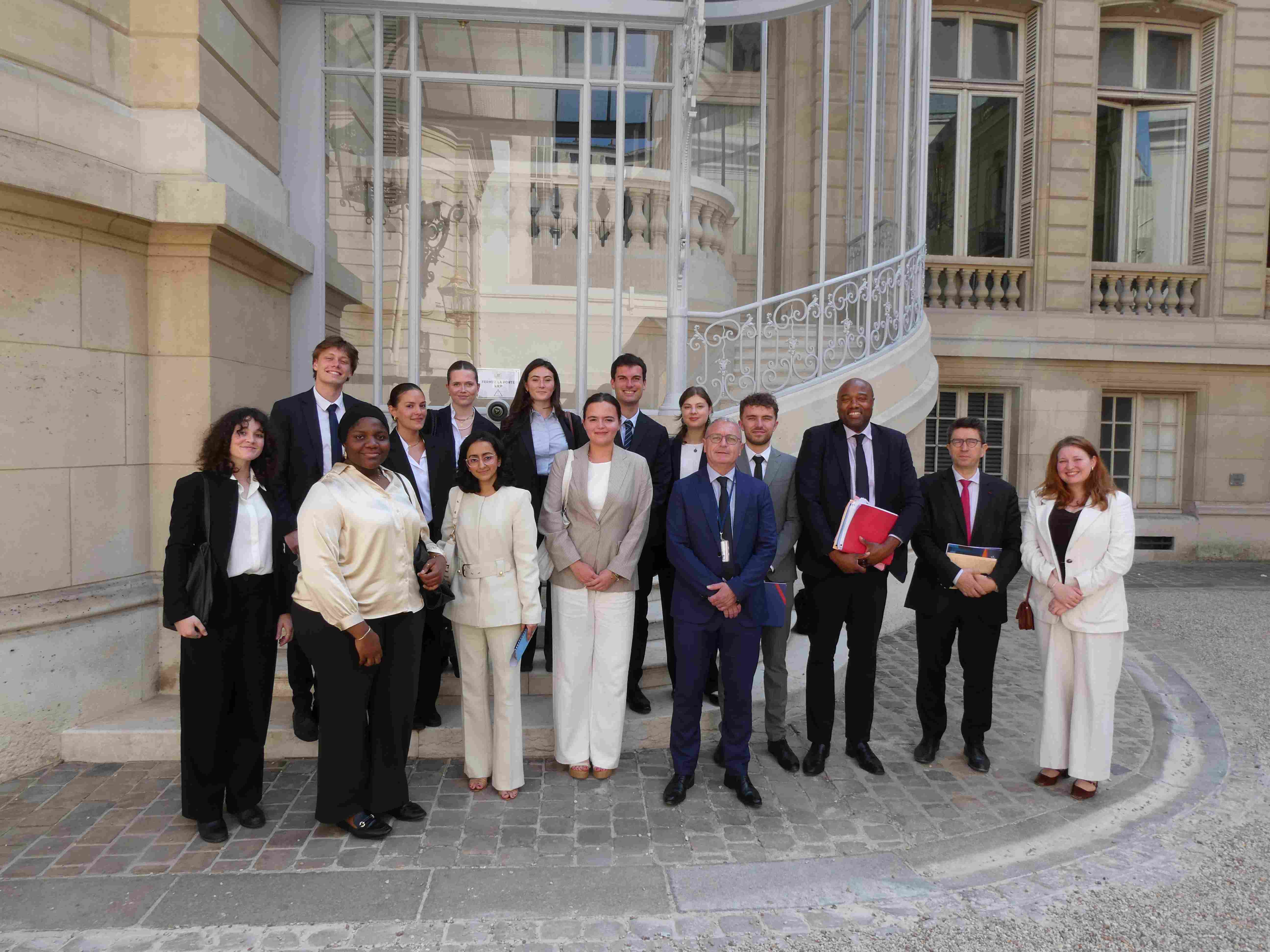
Khushi Tivary s’est jointe à la conversation aux côtés de Lesly Kana et Cypris Remond, faisant suite à leur victoire au concours de l’Entente Cordiale, à leur présentation à l’Élysée et à la poursuite du développement de leur projet d’agroforesterie au-delà du cadre universitaire. Nous avons retrouvé Khushi par la suite afin de comprendre ce que cette expérience a concrètement changé et vers quelle direction elle l’oriente désormais. Tandis que Lesly et Cypris acquièrent actuellement de l’expérience grâce à des stages en France, Khushi a choisi d’emprunter une voie différente au cours de son année de césure.
Elle a créé une entreprise!
Il existe un véritable problème de confiance vis-à-vis de la protéine de lactosérum. Elle est souvent mal réglementée ou, tout simplement, ne convient pas au système digestif de certaines personnes.

Khushi Tivary
Création de Fjör
Être invitée au podcast n’a pas été vécu comme un point d’arrivée.
« Honnêtement, j’ai ressenti cela comme une continuité », confie Khushi. « Pas comme une conclusion, ni comme un moment où l’on se dit "ça y est, on a réussi". Juste comme l’étape suivante. »
Ce qu’elle décrit est moins une percée qu’un changement de trajectoire.
« Avant l’EDHEC, je savais que je voulais avoir un impact, mais je n’avais absolument aucune idée de la manière d’y parvenir. C’était une ambition sans exécution. »
En jetant un regard en arrière, ne serait-ce que d’un an, l’ampleur du changement lui semble difficile à saisir.
« Un an avant l’EDHEC, je n’aurais jamais pu imaginer me retrouver là où je suis aujourd’hui. »
Ce qui a le plus changé, ce n’est pas qu’elle détienne désormais toutes les réponses, mais qu’elle se sente plus à l’aise d’avancer sans les avoir.
« Je crois que je suis beaucoup plus ouverte au risque, à présent. »
De la reconnaissance à la responsabilité
Depuis le concours, les choses ont continué d'évoluer.
Khushi a été invitée à la Chambre des Lords, au Royaume-Uni, par Lord Soames of Fletching, où elle a reçu le prix de l'« Alumna de l'année » 2025, décerné à l'occasion de la Journée de l'Entente cordiale.
Parallèlement, le projet d'agroforesterie est toujours en cours. L'équipe attend actuellement que l'Élysée la mette en relation avec les ambassades de l'Inde, du Cameroun et de la Guyane française, afin d'explorer les pistes de développement futur du projet.
De la compétition à l'entreprise
Tandis que ses coéquipières choisissaient d'acquérir de l'expérience au sein d'organisations établies, Khushi a mis à profit son année de césure pour bâtir quelque chose par elle-même.
« Je suis actuellement en train de monter une start-up en Inde. »
L'idée lui est venue d'une contradiction qu'elle ne pouvait ignorer.
L'Inde est le pays le plus végétarien au monde et, paradoxalement, l'un de ceux où les carences en protéines sont les plus fréquentes. C'est particulièrement vrai pour les femmes.
« Il existe un véritable problème de confiance vis-à-vis des protéines de lactosérum », explique-t-elle. « Elles sont souvent mal réglementées ou, tout simplement, ne conviennent pas au système digestif des gens. »
Sa réponse ne consiste pas en un énième complément alimentaire, mais en un produit que les gens auraient réellement envie de consommer. Fjör est un yaourt islandais qui allie saveur gourmande, teneur élevée en protéines et praticité nomade, le tout réuni dans un seul pot.
« Nous visons 15 grammes de protéines par pot, sans sucres ajoutés et avec un taux de matières grasses proche de zéro. »

Pourquoi l'alimentation, et pourquoi ce choix en particulier ?
Pour Khushi, l'alimentation constitue un point d'entrée pragmatique.
Le skyr est un produit courant en Europe. En Inde, cette catégorie est quasi inexistante.
« Il existe bien une start-up dans le Nord, mais la disponibilité de ses produits est irrégulière. Nous, nous commençons par le Sud, en partant de Bangalore. L'Inde est un pays immense ; il faut faire preuve de stratégie. »
Ce qu'elle bâtit se situe à la croisée de la santé, de l'accessibilité et de la confiance.
Lorsqu'on lui demande si elle perçoit cela comme un travail ou comme une passion, elle n'hésite pas une seconde.
« Les deux. Je ne suis pas seulement le bâtisseur d'une entreprise ; je suis le bâtisseur de tout mon emploi du temps. De ma vie. De tout. »
Apprendre à oser se lancer
La compétition les avait déjà poussés à opérer au-delà de leur zone de confort.
« Plus le risque est élevé, plus la récompense est grande », affirme-t-elle. « C’est ce que nous avons appris au cours de la compétition. »
Ils ont dû jongler entre les examens, les entretiens de terrain auprès d’agriculteurs, les sollicitations d’experts et l’envoi incessant d’e-mails de prospection à froid.
« Cela m’a appris à aller vers les gens. À me présenter. À expliquer ce que je fais et pourquoi je le fais. »
Cet état d’esprit guide désormais ses décisions au quotidien.
Elle se souvient avoir approché un investisseur providentiel qui venait tout juste de déclarer publiquement qu’il n’investirait jamais dans le secteur de la santé et du bien-être en Inde.
« Je l’ai croisé à la sortie du bâtiment et je lui ai dit : "Laissez-moi vous faire changer d’avis." »
De l’« impact » au « déploiement »
Le changement de signature de l’EDHEC — passant de « Make an Impact » à « Unleash Tomorrow » — trouve un écho particulier chez elle.
« Le verbe "déployer" (unleash) semble plus dynamique », affirme-t-elle. « Avoir un impact peut être ponctuel. Déployer quelque chose, c’est amorcer une réaction en chaîne. »
Il s’agit d’agir dès à présent, de manière à ce que les effets de cette action perdurent dans le temps.
Pour elle, c’est aussi là que le concept d’entreprise à impact net positif prend tout son sens.
Non pas comme une simple étiquette, mais comme une orientation. Le choix de bâtir de telle sorte que les individus et les écosystèmes en ressortent grandis.
L'épisode du podcast du Centre for Net Positive Business, avec Khushi Tivary, Lesly Kana et Cypris Remond, est désormais disponible : https://open.spotify.com/episode/4c4FPKdT8QHZfxijQmEhgm