
From engineer to energy market analyst: how the EDHEC Global MBA helped Wei Nian Chan build a career bridge in Europe
Wei Nian Chan came to the EDHEC Global MBA Programme to move beyond technical engineering roles. Through the programme, and an internship with SBM Offshore, he turned energy transition expertise into a permanent business-facing position in Europe.


Why pursue an MBA after an engineering career?
For Wei Nian Chan, an engineer working on Singapore’s energy transition at Shell, the technical challenge of carbon capture seemed, at first, to be exactly that: technical. For candidates from technical backgrounds in Asia who want to move into business-facing roles in Europe, Wei Nian shows that engineering credibility combined with business training is something European energy companies are looking for.
But, after over a decade building his career at the multinational, Chan faced a problem that engineering alone couldn’t solve.
Working on carbon capture, his team had addressed the technical issues and brought the costs below the benchmark. Yet that still wasn’t enough to get the project off the ground.
“None of it mattered,” he says. “The market wasn’t ready.”
Chan realised that the bottleneck he was facing wasn’t an engineering problem. “The bottleneck was coming up with business cases and business models that would make the energy transition commercially viable and, ultimately, affordable for the end-users who are living their everyday lives,” he says.
It was a lightbulb moment that convinced him that his next step was to develop a new skillset in the commercial space. “I was already leading teams on technical projects, but that’s quite different from leading teams that are commercial,” he says. “It’s a whole different world.”
Moving from engineering to business development in Europe
Chan made a conscious decision to pursue an MBA as a result — and knew he wanted to study at a European school. Not only did Europe’s location between Asia and the United States mean that he could remain connected to home, but the European approach to the energy transition appealed to him. “Of course, European companies pursue profits, but they also fundamentally serve society to ensure people have access to affordable basic services like energy,” he explains. “That style is closer to what Asia is like.”
He also knew that he wanted the European experience to extend beyond the classroom. Chan’s plan was not only to earn an MBA in Europe — but to remain on the continent for work upon graduation.
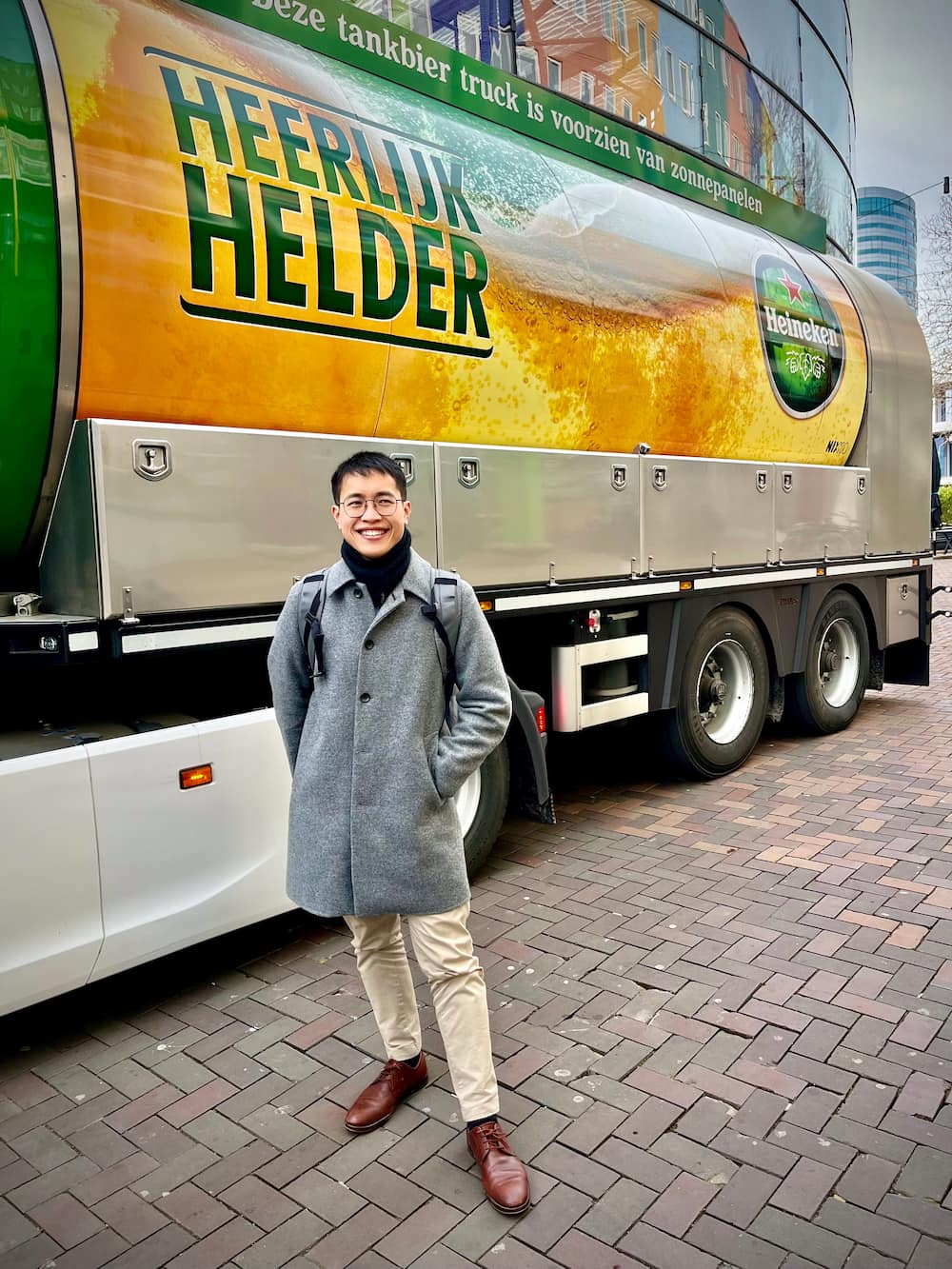
Choosing an MBA in Europe as an international candidate
Chan says there were plenty of business schools on his radar, but EDHEC’s Global MBA stood out for what he describes as one “significant” reason: “there’s a sustainability focus that’s really woven into all the programs, rather than being set apart as a distinct module of its own,” he says.
Speaking with other students and faculty, he was also reassured that sustainability wasn’t merely a final paragraph mandatory in every assignment, but that it was core to the entire program, with a clear emphasis on how you can create business value from it.
Having family outside Paris, France was also high on his wishlist. Nice held an additional attraction. “I like to cycle, so the Côte d’Azur is a paradise,” he says.
As part of the 2024 cohort, Chan quickly realised how his “engineering, analytical, bottom-up thinking” had really shaped the way he looks at problems. “Engineers need to know how to zoom out,” he says.
Sometimes, that means they can become caught up in the details of making something work, he adds. “We can over-engineer things.”
But, he adds, engineers also approach problems with confidence that they can solve them, and, by the nature of their training, are cost-sensitive.
The MBA, Chan reflects, has added a new layer to this skillset. “It’s given me the tools and the confidence and the frameworks to communicate and describe a problem in a way that will make sense to someone who needs to pay to solve it,” he says.
Chan particularly appreciated the case challenges that formed a key part of the 12-month curriculum. “Those real-life cases really helped us to take the academic and apply it to the real world,” he says.
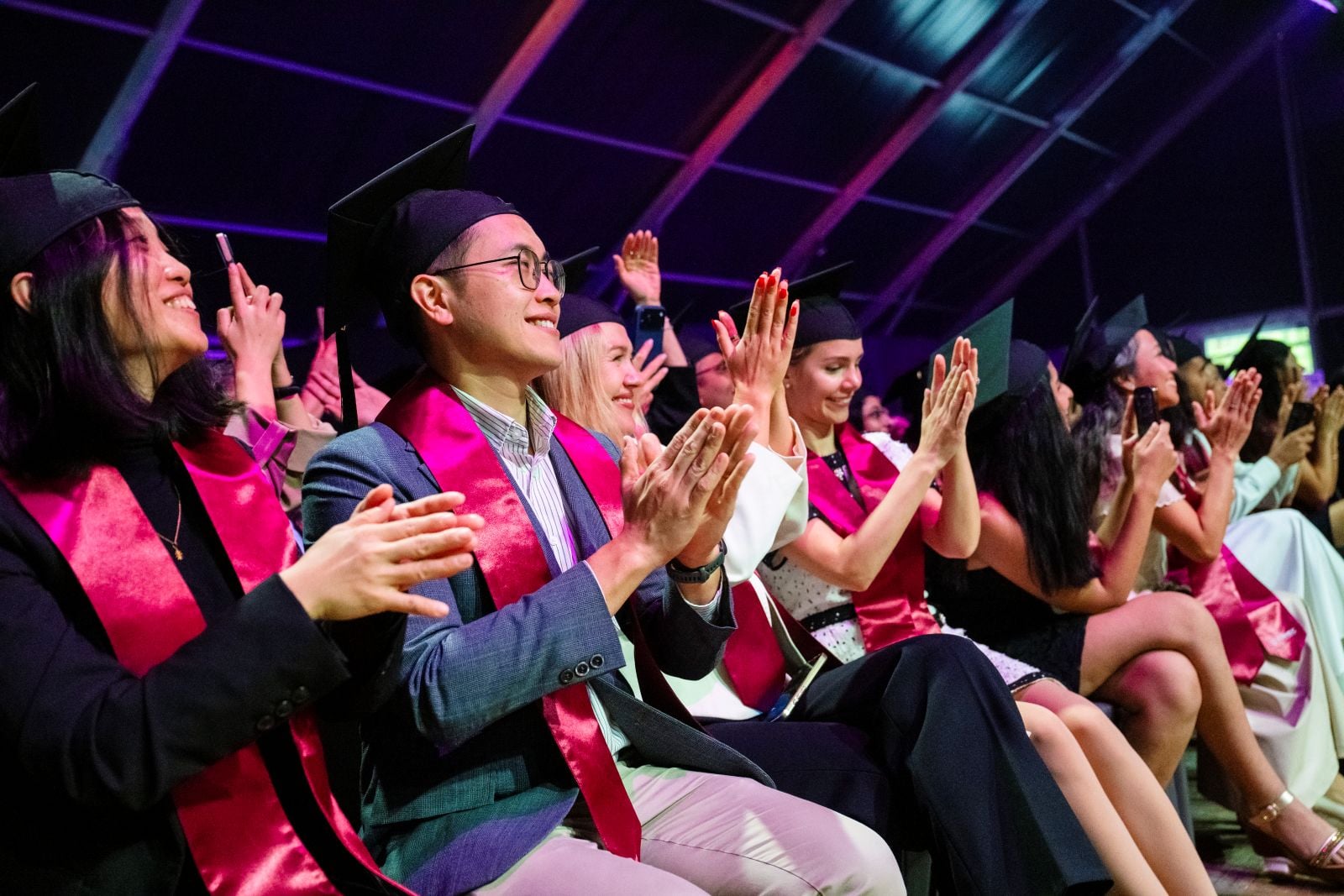
A highlight was the Global MBA hackathon in Paris. “That was definitely quite an experience because it was under a lot of time pressure to deliver, and quite notably, for Schneider Electric” he says. The case challenge involved revamping an energy management product, then bringing it to market. “That was interesting because it was quite a good combination of my technical and commercial skills,” he says. In other words: “we needed to know what the technical problem was, but we also needed to sell it”.
The sustainability impact module left the biggest imprint, however. “It was very interesting because that was where we were really taught how to frame sustainability as a core strategic lever to capture the market,” he says.
Applying MBA learning to real sustainability challenges
Another pivotal moment was the MBA’s Sustainable Impact Challenge (SIC), where students work on critical sustainability issues with companies, start-ups, NGOs and associations. The event allowed Chan to connect with deepwater ocean-infrastructure firm SBM Offshore. It was a meeting that would lead to an internship in the Netherlands that’s now become a permanent placement as a Senior Market Analyst — exactly the type of position he had hoped an MBA in Europe could help him reach.
Chan believes that the oil and gas supermajors have been bridging technical and commercial expertise for years. But as non-supermajors like SBM Offshore increasingly address the energy transition themselves, Chan sees opportunity in this space for professionals who can offer both technical expertise and commercial acumen.
Career advice for other engineers considering an MBA
For anyone considering a similar move from Asia to Europe for an MBA and then into a business-facing role, his advice would be to just go for it. “Things work differently, but just because it’s not always obvious how it works doesn’t mean it doesn’t work,” he says.
Approaching those differences with curiosity is part of the education, he adds. “There is a lot to learn, and a lot of your own experiences to contribute, too.”
For Chan, much of the attraction of EDHEC was the opportunity to encounter a different way of thinking — and to see where it might lead. As he reflects, “innovation comes from changing the way you look at the world”.

Are you ready to transform your career?
Find out how the EDHEC Global MBA will give you the tools, knowledge and confidence you need to accelerate your international career


