
From Real Estate to Industrial marketing and business development: How This GMBA Alumna Built Her European Career
Civil engineer Julissa Gomez came to the EDHEC Global MBA from Latin America with a background in real estate development and a long-standing interest in sustainability. Through the programme’s international cohort, company exposure, career development and sustainability ecosystem, she built a route into ArcelorMittal, showing how a European company can recognise the value of a non-EU profile when that value is clear, relevant and well positioned.


EDHEC GMBA alumna Julissa Gomez’s move from Latin American real estate development to industrial marketing and business development in Europe did not begin with a perfect job description.
It began with a long-held desire to study abroad, work internationally and place herself in environments where different perspectives could sharpen her own.
“Since I was young, I wanted to have a more international experience,” she says. “I believe that every country and culture has something to teach.”
That instinct brought her to the EDHEC Global MBA in Nice. The programme gave that ambition a practical structure: 10 full-time months of strategic foundations, leadership development, sustainability learning, corporate exposure and career support, all within an international cohort. For Julissa, this combination mattered because her next step required more than a polished CV. It required context, confidence, repeated contact with employers, and the ability to connect her experience to business needs in Europe.
Before the MBA, she had built her career as a civil engineer in real estate development, managing projects for clients coming across Latin America. Her work already involved technical judgement, long-term planning and coordination across stakeholders. It also required a clear understanding of how projects affect the wider environment around them.
“I was doing project management for real estate development,” she explains. “That is a lot about strategy, understanding the context, needs and expectations, and how a project can impact the environment. So I thought that an MBA would be a good fit with my experience.”
Her path to ArcelorMittal, a major global steel company, would be shaped by her own persistence and initiative. It would also be shaped by the Global MBA itself: the company trek that first brought ArcelorMittal into view, the climate adaptation event that created a second opening, the sustainability learning that made her proposal credible, and the career development environment that helped turn networking into a professional skill.
A Global MBA refocus from real estate to business development
At first glance, Julissa’s journey looks like a sharp pivot: civil engineering and real estate in Latin America to business development at first with sustainability-focused work in European industry, in a role that starts with an internship in cost benefits analysis for adaptation projects.
She sees it differently.
“I wouldn’t call it a shift. I would call it a refocus.”
Her interest in sustainability was already present before the MBA. As an engineering student, she had been drawn to energy infrastructure and the role it could play in shaping economies, communities and environmental outcomes.
“I have always been interested in sustainability and doing projects that have a positive impact in their context,” she says. “That is one of the reasons why I studied engineering.”
She remembers visiting hydraulic, geothermal and wind projects during her studies, and being struck by their scale and purpose. Those early experiences stayed with her, even as her professional career developed in real estate.
The European context gave that interest new momentum. Julissa came from a country where a large share of electricity production already comes from renewable sources. In Europe, she saw a different kind of opportunity: industries adapting to transition pressures, companies working through climate and sustainability challenges, and employers looking for profiles able to connect technical experience with business judgement.
“By being here I realised that there are contexts where there are still a lot of things to do, and willingness to do it,” she says. “So I got motivated again about those topics.”
The EDHEC Global MBA gave her a way to explore that motivation through a business lens. Sustainability runs through the programme through dedicated business issues, learning expeditions, the Sustainable Impact Challenge and opportunities to apply MBA learning to real company challenges. In Julissa’s case, these elements helped connect her engineering background to industrial sustainability and adaptation, and later to a concrete opportunity with ArcelorMittal.
How EDHEC company treks opened the first door to ArcelorMittal
The first decisive moment came during an EDHEC company trek to Luxembourg.
Company treks are part of the Global MBA’s corporate exposure, giving participants access to organisations, sectors and business hubs. For Julissa, the visit to ArcelorMittal was the central reason to join that particular trip.
“Arcelor was in fact the first company we visited and the reason I did the trip,” she says.
After the company presentations, she met the person who would later become her manager during a networking coffee. It could have remained a brief exchange, the sort of professional coffee that disappears quietly into the calendar and is never spoken of again. Julissa made sure it did not.
“I reached her out on LinkedIn and asked a couple of questions,” she says.
That follow-up mattered. The programme had placed her in the room. Gomez then extended the moment, turning a company visit into the beginning of a professional relationship.
This was also part of a wider personal shift. Networking had never been a comfortable space for her before the MBA.
“Networking was something I never did before. I didn’t like it at all and now it’s part of my current job.”
The Global MBA gave her repeated opportunities to practise that skill: through company treks, career development sessions, events, peer exchange and contact with employers. Over time, networking became less about performing confidence and more about listening carefully, asking relevant questions and understanding where her background could create value.
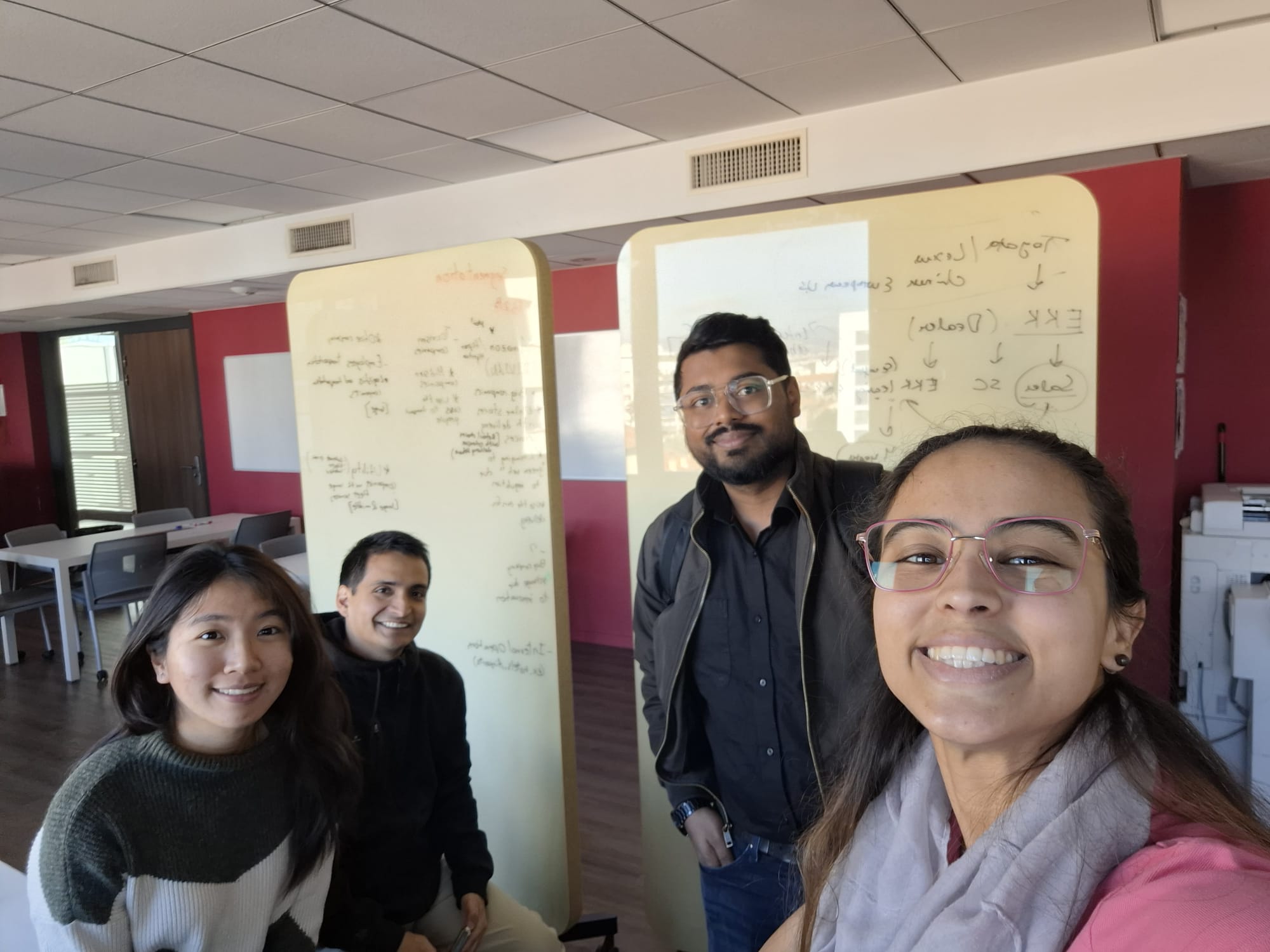
ESG learning that connected her MBA to industry
The second decisive moment took place at EDHEC’s Nice campus.
Julissa attended a climate adaptation event co-organised by EDHEC and the European Investment Bank because the subject interested her. During the event, she realised that the ArcelorMittal contact she had met in Luxembourg was also there.
“I saw an event about climate adaptation co-organised by EDHEC and EIB in EDHEC Nice Campus and I went,” she says. “It was a very interesting event and in the middle of that I realised she was there.”
This time, the conversation had more substance. They discussed the event, the relevance of climate adaptation for ArcelorMittal and its clients, and how sustainability issues were becoming increasingly important.
Julissa had already applied directly to ArcelorMittal without success. The standard application route had not opened the door. The MBA environment gave her another route: a relevant professional setting, a previous contact created through a company trek, and enough context to propose something useful.
“I reached her out and we discussed a bit about the event and why it was relevant for Arcelor,” she says. “I asked if it was possible to do an internship there.”
Her contact invited her to suggest a topic. Julissa built a proposal connected to the climate adaptation event, aligned with her MBA experience, and relevant to ArcelorMittal’s priorities.
“I proposed something related with the event since I knew it was relevant for the company and also aligned with my MBA,” she says.
The proposal was approved. The internship became her entry point into ArcelorMittal. Later, it became a full-time role.
That sequence captures the balance of Julissa’s journey. The EDHEC Global MBA created the conditions: access to ArcelorMittal, sustainability-focused events, corporate exposure, career development and a learning environment where she could connect technical experience to business issues. Julissa brought the initiative to act on those conditions with precision.
Getting hired in Europe as a non-EU MBA graduate
For many non-EU professionals, getting hired in Europe can feel difficult to navigate. Experience acquired in another region may be substantial, but recruiters do not always understand its value immediately. Employers may also need a clear reason to take on the practical complexity that can come with an international hire.
Julissa is direct about the challenge.
“It is freaking hard. You need to be creative.”
Her experience with ArcelorMittal shows a realistic version of how the process can work. A European company can take on a non-EU profile when the value is clear, credible and connected to a concrete business need.
Julissa did not present herself only as an international candidate seeking a first chance in Europe. She connected several elements: her civil engineering background, her real estate project management experience, her interest in sustainability, her MBA learning, and ArcelorMittal’s climate adaptation needs.
That made her profile easier to understand. It also gave the company a practical way to assess her contribution.
“I ended up inventing an internship and having the luck to get it approved,” she says. “That was my entry point.”
Once inside the company, she could demonstrate her value through the work itself. The internship opened the door because it gave both sides a real project, rather than a hypothetical fit discussed only through CV language.
This is where the original lesson becomes clear. ArcelorMittal shows that a European company can take on a non-EU hire when it sees the value, relevance and experience that person can bring. The MBA helped Julissa make that value visible.
MBA career development for the realities of a European job search
Julissa’s advice to future candidates is useful because it avoids false comfort. She does not suggest that an international job search becomes simple after an MBA. She knows the process can be long, uneven and sometimes bruising.
“Be creative and patient, propose ideas and do networking,” she says.
She also recognises that different approaches work for different people. Some candidates secure roles through direct applications. Others need to build opportunities through conversations, referrals, projects or internships. For candidates from outside Europe, that distinction matters. Traditional applications can work, but they often place international profiles into systems that may not fully understand them.
Creativity gives candidates another way to show value.
“Sometimes you need to accept a thousand rejections before getting an opportunity.”
There is no varnish on that sentence, which is precisely why it works. It acknowledges the reality without surrendering to it.
The EDHEC Global MBA supported Gomez through a career development environment built around preparation, positioning and practice. Lead360, career coaching, company exposure and peer learning helped her build habits she would later use directly in her job search. The programme did not remove the difficulty of entering the European market. It helped her become more strategic in how she approached it.
Networking through an international MBA cohort
The Global MBA cohort also played a role in Julissa’s development. Working with classmates from different industries, cultures and professional backgrounds gave her a broader view of leadership and collaboration.
“I had amazing classmates who showed me different ways of being a leader and making things happen,” she says.
Some experiences were more challenging, but still useful.
“I had very difficult ones who forced me to improve my character, be more patient and accept limitations.”
An MBA cohort can be a network, a mirror and, on certain days, a politely scheduled stress test. Julissa appears to have taken value from all three.
She also came away with a lesson from one professor that stayed with her: never assume. For someone building a career across borders, industries and cultures, that lesson proved practical. Assumptions can narrow a job search, flatten a conversation or make a candidate miss the value of an unexpected contact.
Julissa’s experience taught her to pay attention.
“I believe it is important when you meet others to pay attention to their experience, their background, their ambitions,” she says. “You never know when you meet the right person for something that will come later.”
In her case, that line became more than career advice. The person she met during an EDHEC company trek reappeared at an EDHEC climate event. The second conversation became an internship proposal. The internship became a full-time role.
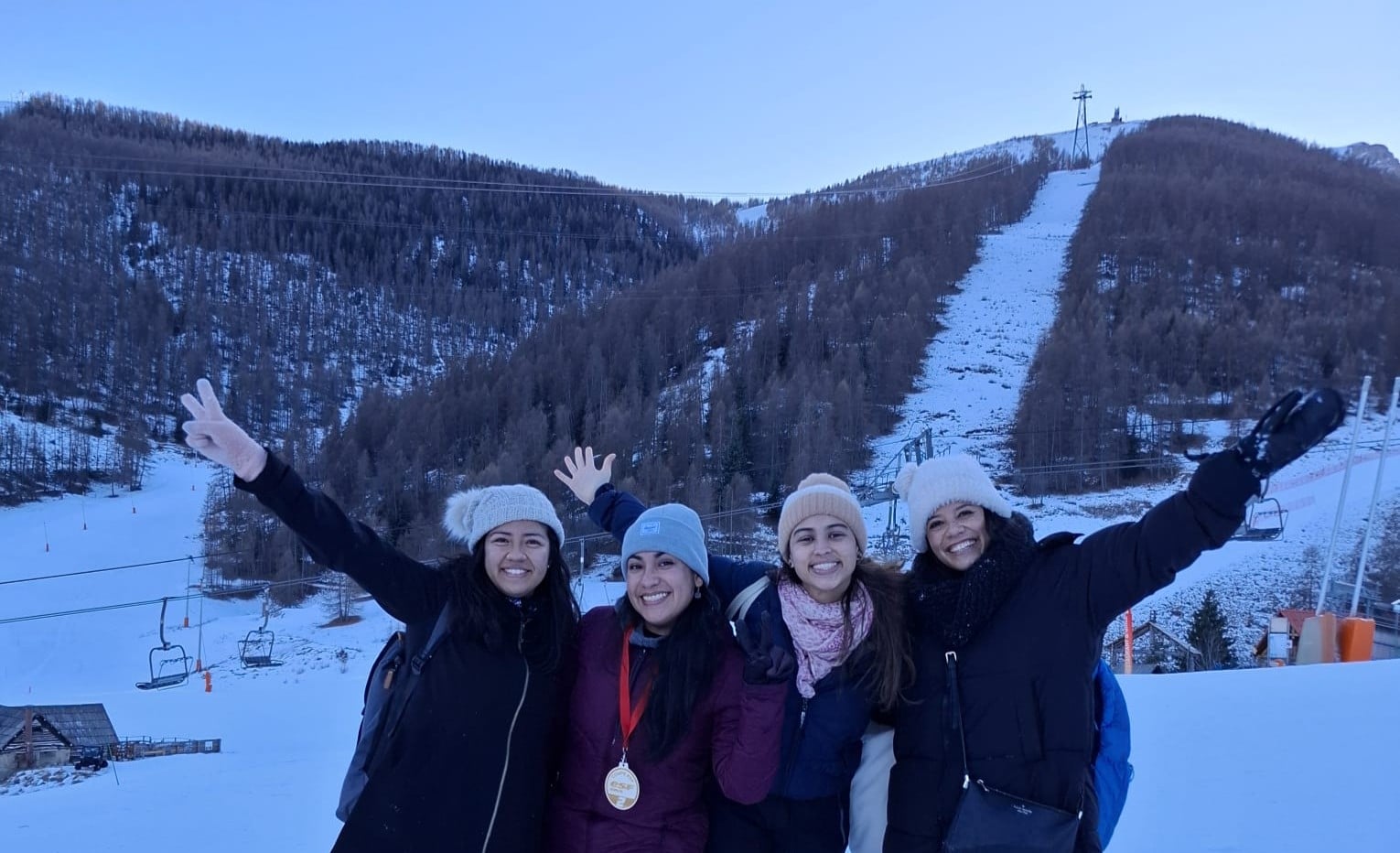
Post-MBA career outcomes built on experience, timing and value
Julissa Gomez’s story offers a grounded message for future Global MBA candidates, particularly those coming from outside Europe.
A non-EU background can be valuable to a European employer when the candidate can show how their experience responds to the company’s needs. International experience becomes stronger when it is translated into business relevance. Technical expertise travels further when paired with strategic clarity, relationship-building and the ability to propose solutions.
For Gomez, EDHEC provided the environment in which those pieces could come together. The Global MBA brought her into contact with ArcelorMittal, exposed her to sustainability discussions with real industrial relevance, strengthened her approach to networking and gave her a framework to reposition her experience for Europe.
Her own agency gave that structure its force.
“I would say the MBA made me recognise the value of connection,” she says. “Talking to people in events, for example, can open a lot more doors than you can imagine.”
Her journey from real estate to industrial marketing and business development was shaped by the programme, sharpened by persistence and carried forward by a willingness to act when the moment appeared.
Or, as she puts it: “You never know when you meet the right person for something that will come later.”
Ready to build an international career with purpose and direction?
Discover how the EDHEC Global MBA can help you expand your network, explore new sectors and connect your experience to opportunities in Europe and beyond.


