
Insights
In this section, discover the interviews and maps of the month presented by the chair
Interviews of the Month
October 2026

Theresa Reinold — Professor of Geopolitics at EDHEC Business School
Are some tech giants becoming quasi-sovereign actors? Theresa Reinold explains why geopolitics must be taught in business schools, where the line lies between corporate power and sovereignty, how Big Tech and American political power are intertwined, why Europe must become strategically indispensable, and why the quantum revolution is still underestimated.
September 2026

Marie-Pierre de Bailliencourt — Advisory Board Member, EDHEC Chair in Geopolitics and Business Strategy
Why can no credible business strategy today ignore geopolitics? Marie-Pierre de Bailliencourt, Advisory Board member of EDHEC's Chair in Geopolitics and Business Strategy, shares her view on the return of power politics, Europe's hesitations as a geopolitical actor, the case against a Chief Geopolitical Officer, and the major trends set to reshape the balance of power over the century ahead.
July 2026

Thibaut Joltreau — Professor of Geopolitics, EDHEC
Why has geopolitics become essential in a business school? Thibaut Joltreau, Professor of Geopolitics at EDHEC, shares his vision on teaching geopolitics applied to business, the strategic potential of the circular economy, the US-China rivalry, and the major geopolitical trends that will reshape power dynamics over the coming century.
June 2026

Emmanuelle Crane — Founder and Principal, Emmanuelle Crane Consulting
In a world where geopolitical landmarks are fading and culture is becoming a strategic imperative, how must companies and educational institutions reinvent themselves? Emmanuelle Crane—an anthropologist by training, intercultural management consultant, and Board Member of the EDHEC Chair in Geopolitics and Corporate Strategy—shares her insights on cultural intelligence, the growing prominence of geopolitics in corporate strategy, and the essential competencies required to navigate a world of competing blocs.
May 2026
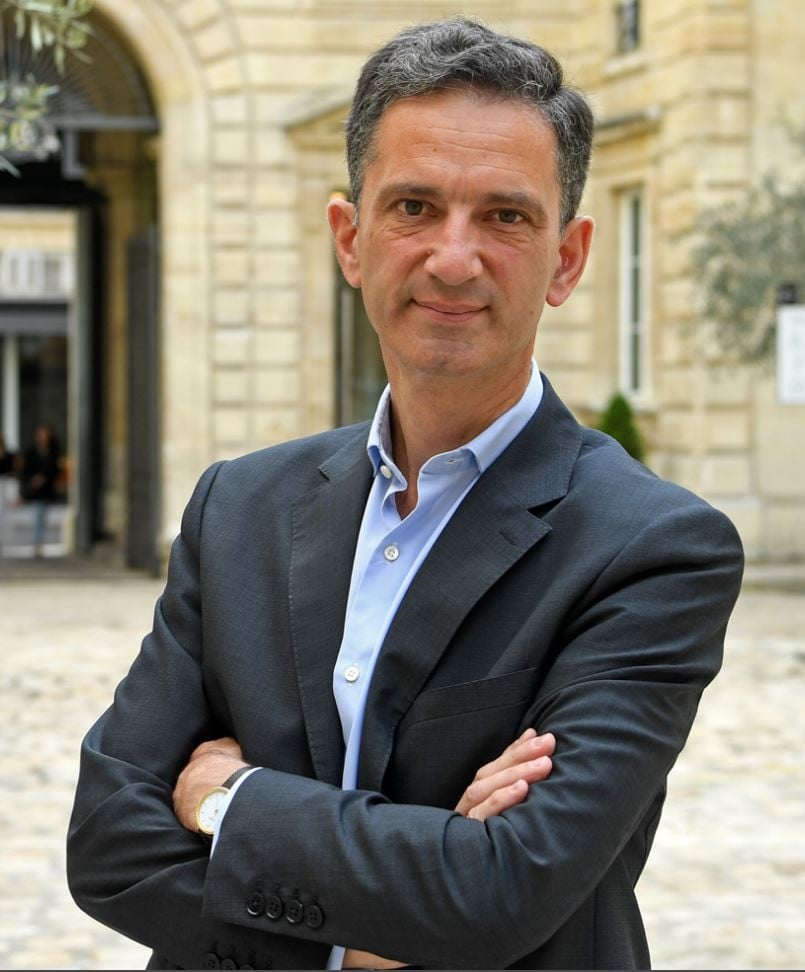
Xavier Hürstel — President of ADP International
An airport is not merely an infrastructure — it is a sovereign asset. Xavier Hürstel, head of international development at Aéroports de Paris, deciphers the new geopolitical realities of global air transport: the maritimisation of energy flows, strategic chokepoints, the complex relationship between states and companies, and the singular place of European capitalism in a world undergoing recomposition.
April 2026

Jean-Vincent Holeindre — Director of the Thucydides Centre, Université Paris II Panthéon-Assas
Commerce and war are not mutually exclusive — they combine. Jean-Vincent Holeindre, specialist in international relations, analyses the recomposition of the contemporary world: the end of the liberal illusion, the strategic role of Europe, hybrid warfare, and the growing importance of geopolitics in the training of business decision-makers.
March 2026
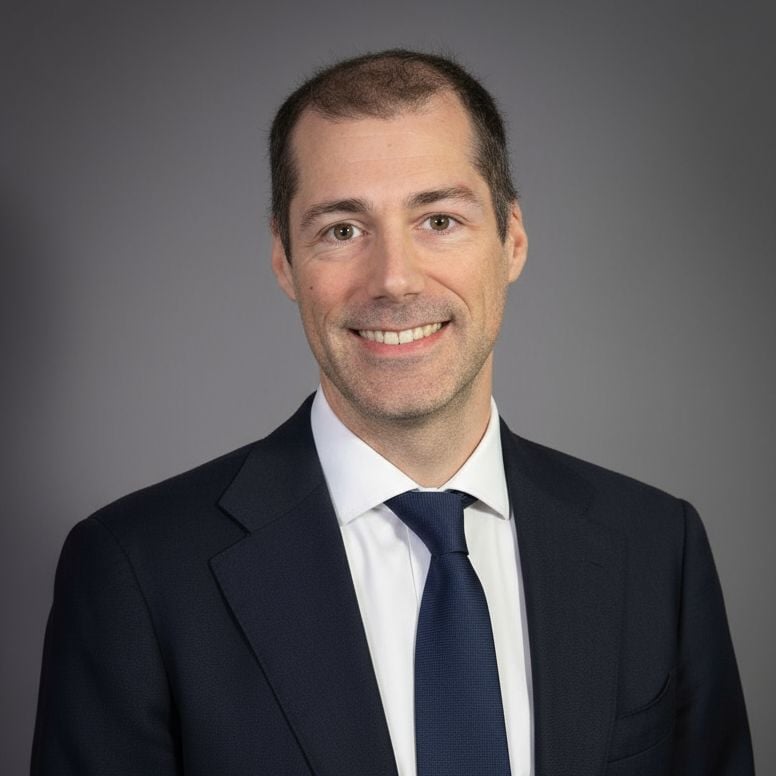
Sébastien Bussone — International Sanctions and Embargoes Expert, Civilian Auditor of the 30th cohort of the École de Guerre
Primary sanctions, extraterritoriality of American law, counter-sanctions… how do companies find themselves caught in a vice between geopolitical power dynamics they never chose? Sébastien Bussone deciphers the mechanisms of international sanctions and explains how to anticipate these risks rather than simply absorb them.
January 2026
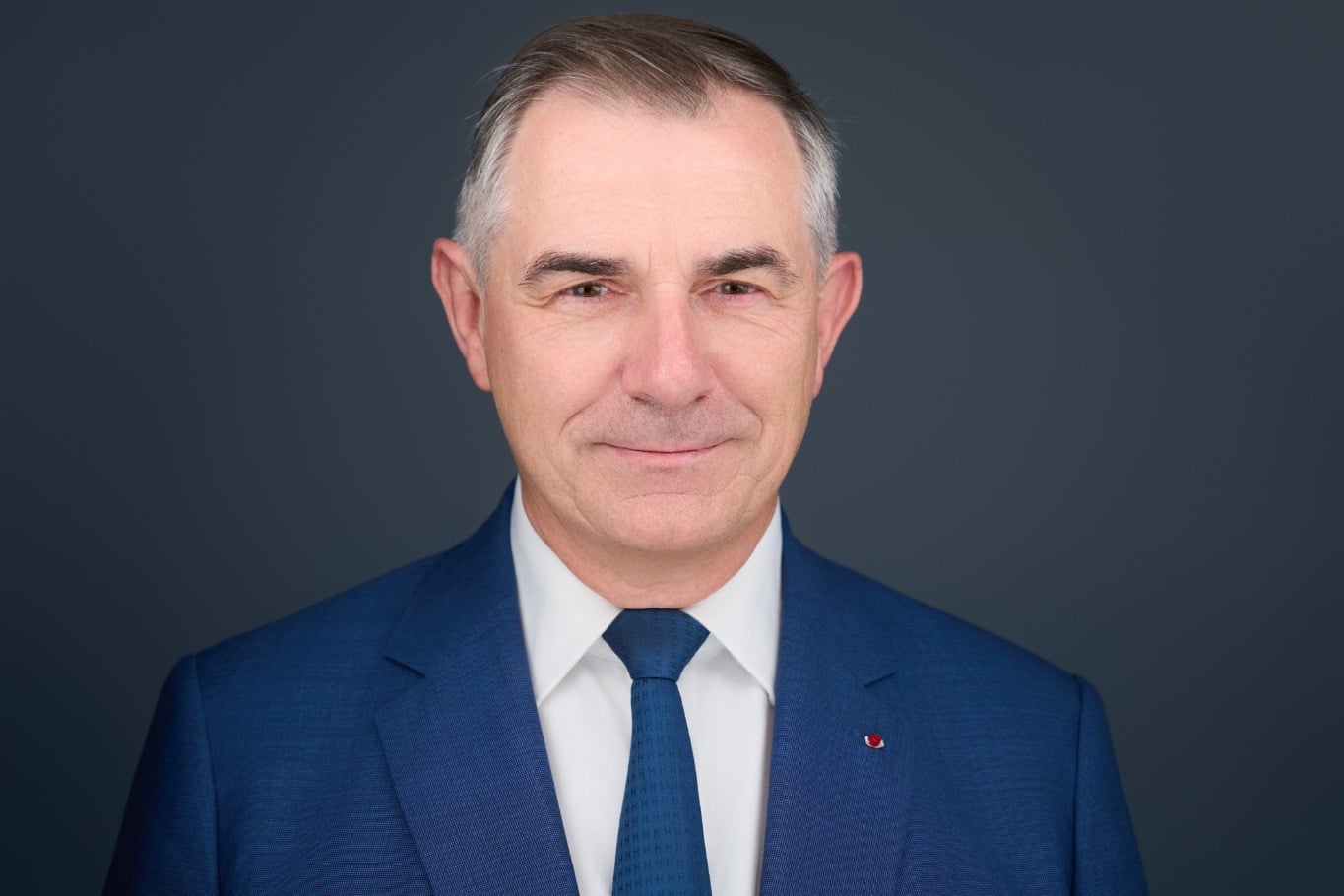
General Éric Autellet — Chairman of the Board, Défense Angels
In a world where economic, political, and geopolitical logics are becoming increasingly intertwined, how should companies adapt their strategy? Éric Autellet, a former military officer turned trusted intermediary between the state, businesses, and actors in strategic thinking, shares his vision on geopolitical risk, technological sovereignty, and the future of European power.
Maps of the month
October 2026
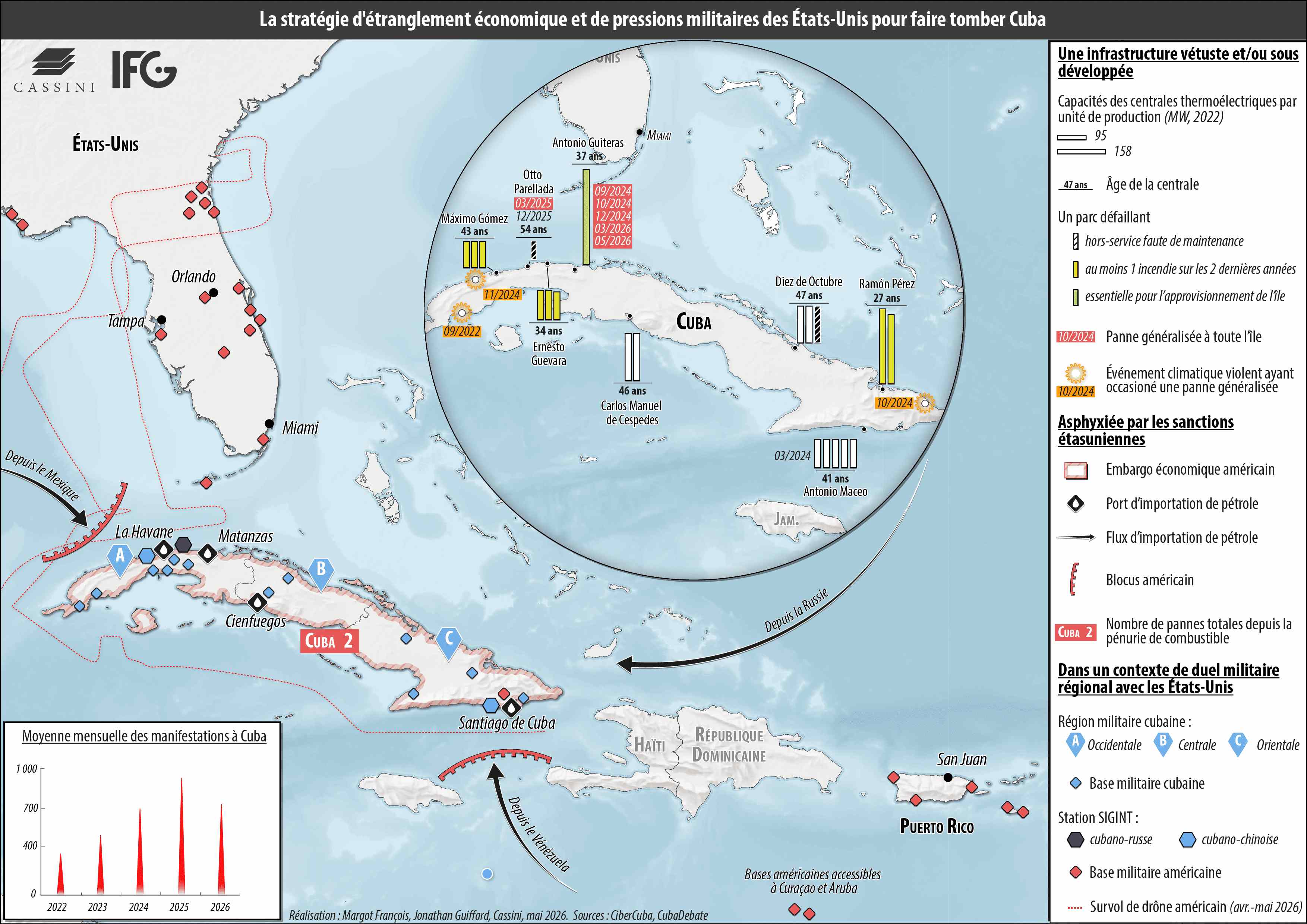
Cuba: the geopolitics of asphyxiation
Oil, sanctions, blackouts: since the capture of Nicolás Maduro and the end of Venezuelan oil deliveries, Washington has steadily tightened its grip on Cuba through tariffs, targeted sanctions and military pressure. As the grid collapses and the crisis turns humanitarian, Marco Rubio is betting on time. A cartographic look at a strategy of strangulation that the Cuban people are paying for.
September 2026
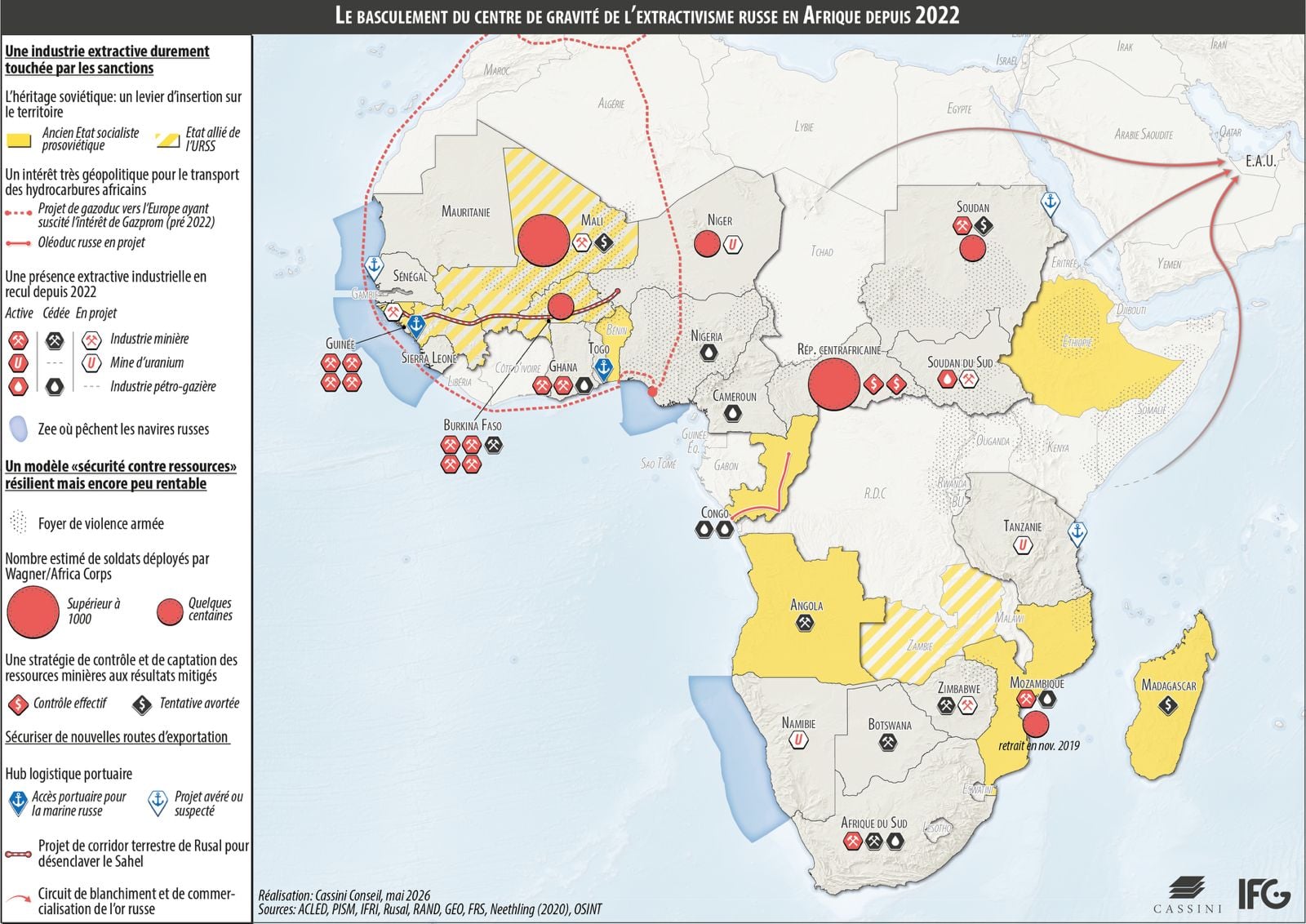
Russia-Africa: the end of a model?
Gold, minerals, energy: for two decades Russia has relied on transactional diplomacy and the shadowy Wagner network to secure African resources and reassert its great-power status. But Western sanctions and the war in Ukraine have forced a retreat into shell companies and isolated partners. A cartographic look at a model of extraction now on the defensive.
July 2026
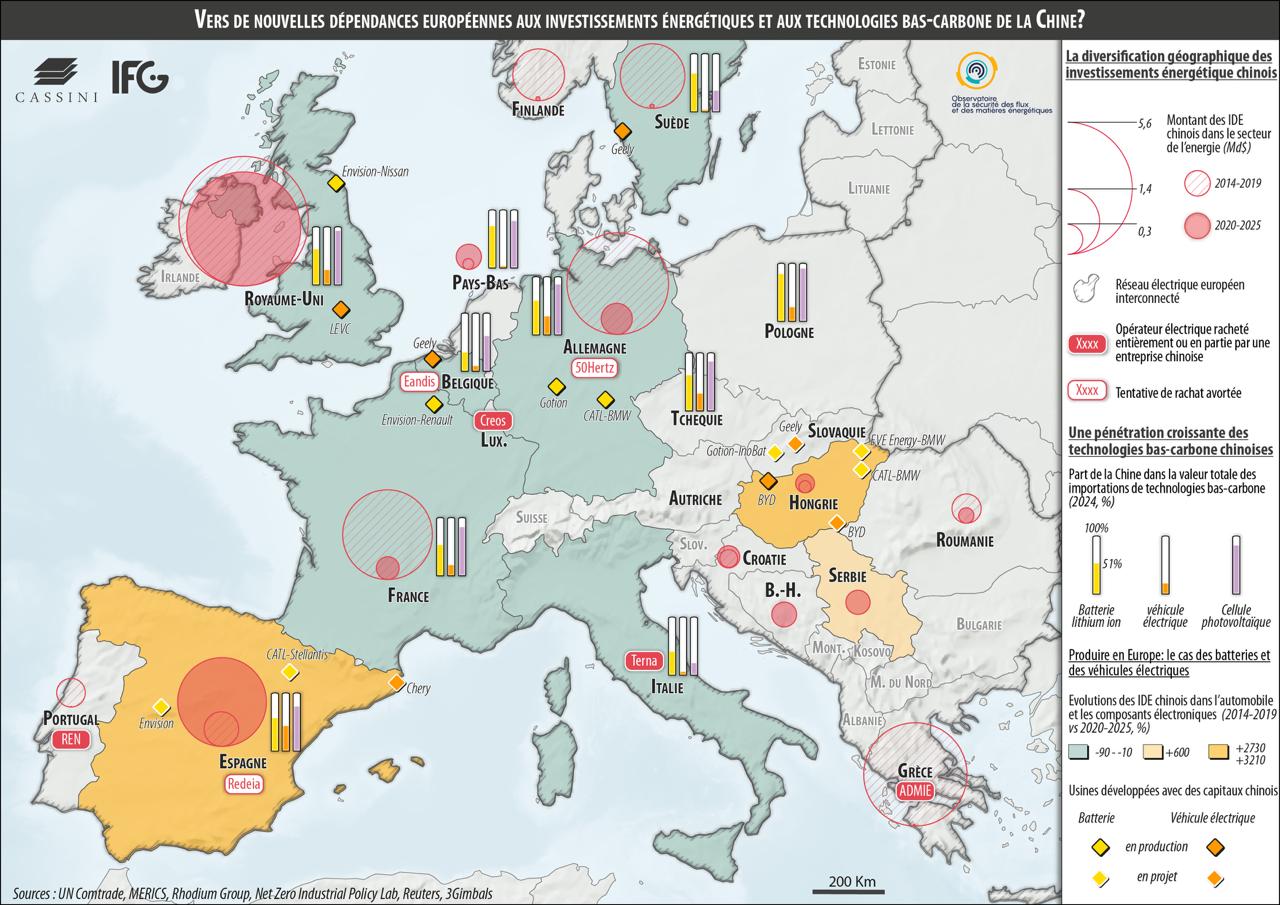
Chinese investment in Europe: economic opportunity or strategic dependence?
Power grids, solar panels, batteries, electric vehicles: China is expanding its grip on Europe's low-carbon technologies, from major industrial capitals to countries on the continent's periphery. A cartographic analysis of Chinese investment flows that raises questions about Europe's ability to control its own energy transition.
June 2026
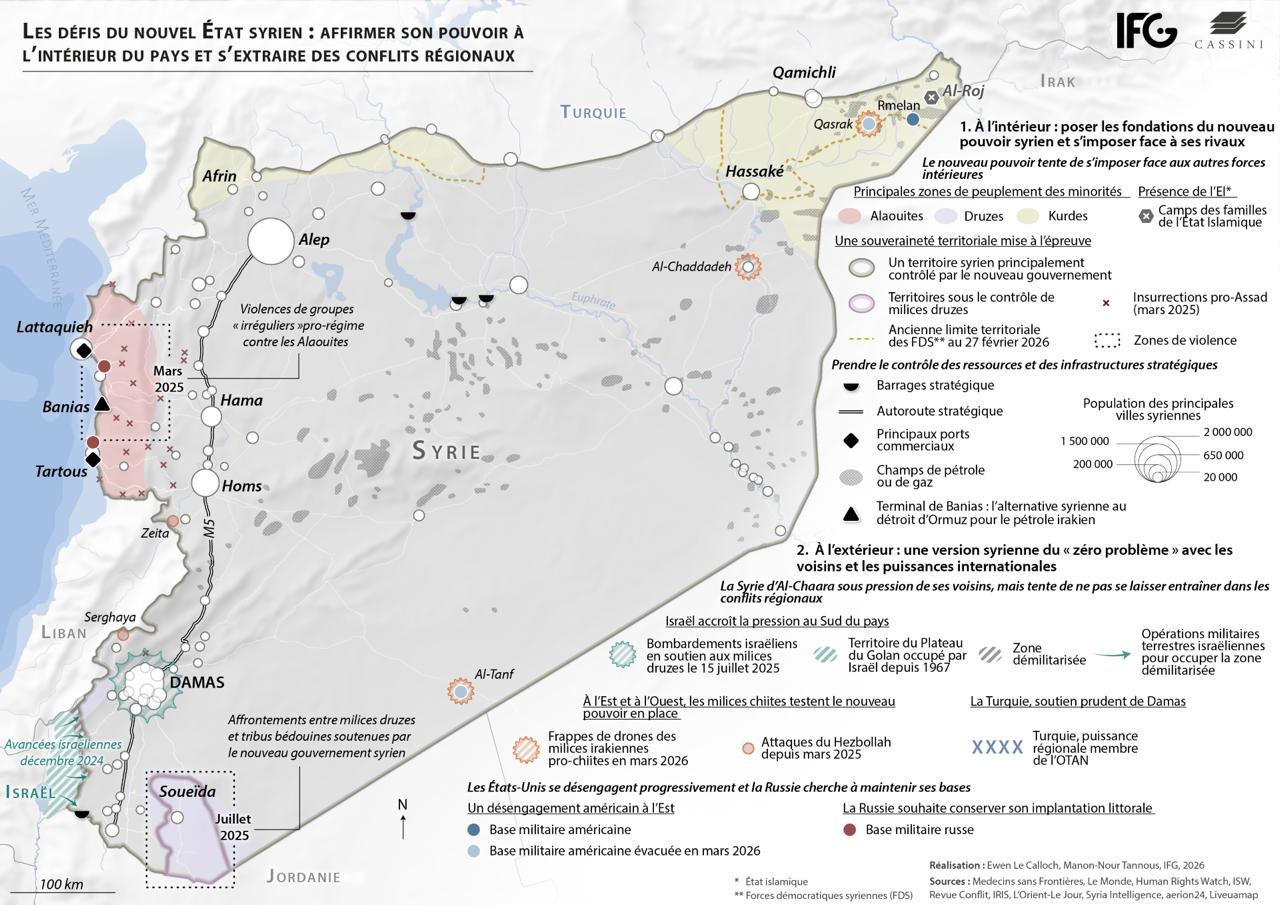
Syria in Transition: Between the Balance of Powers and Internal Fractures
From reconstruction and contradictory alliances to communal tensions and the Kurdish question — the fall of Bashar al-Assad in December 2024 has left Syria still searching for its footing. A cartographic analysis of the internal challenges and international power plays shaping the future of a country at the crossroads of every regional crisis.
May 2026
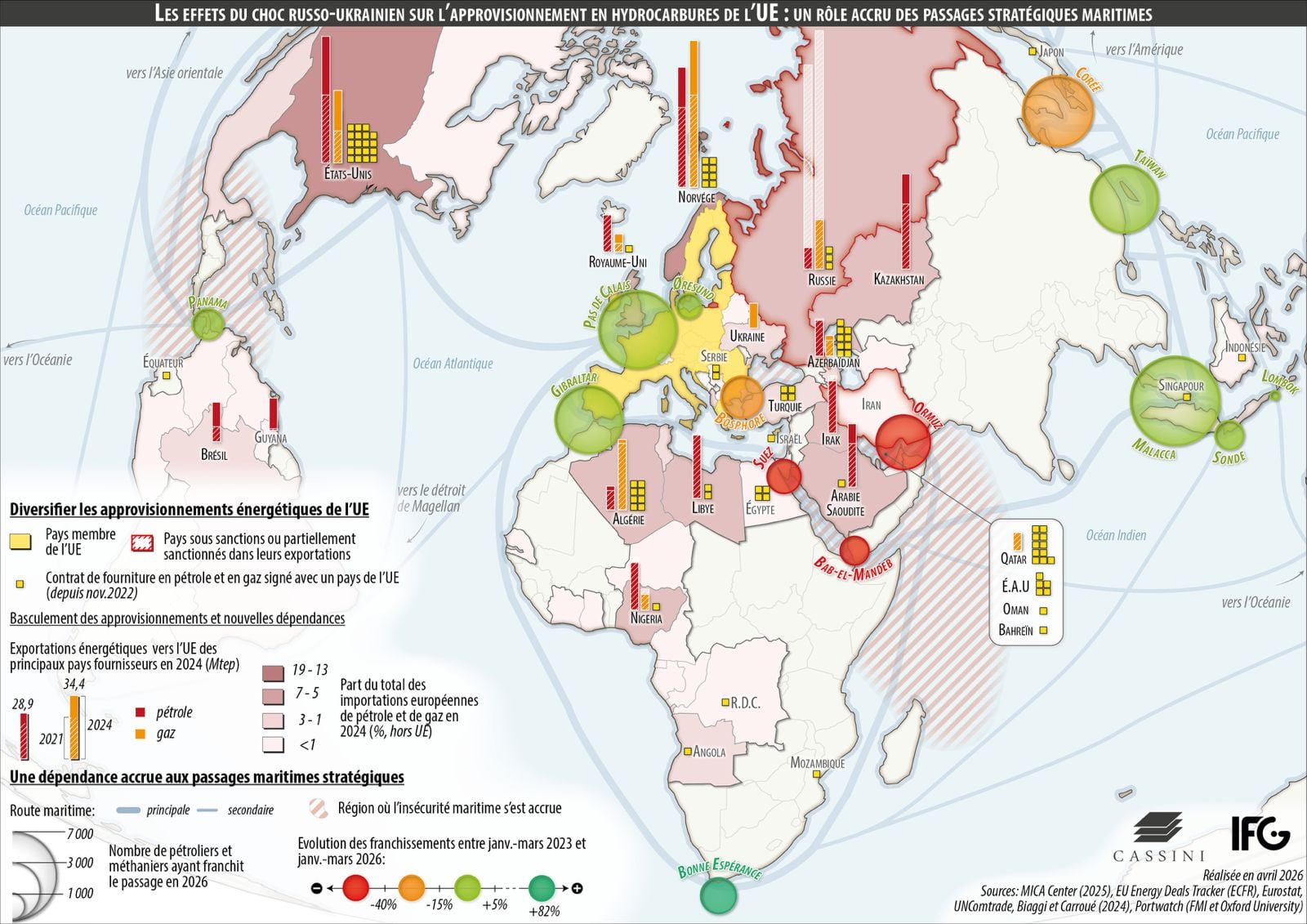
Strategic Straits and Europe's Energy Pivot
From Hormuz to Gibraltar, by way of the Bosphorus and Bab-el-Mandeb: how has the Russian shock forced Europe to rethink its energy supply routes? And to what extent do strategic maritime chokepoints now hold the fate of European hydrocarbon imports in their hands?
April 2026
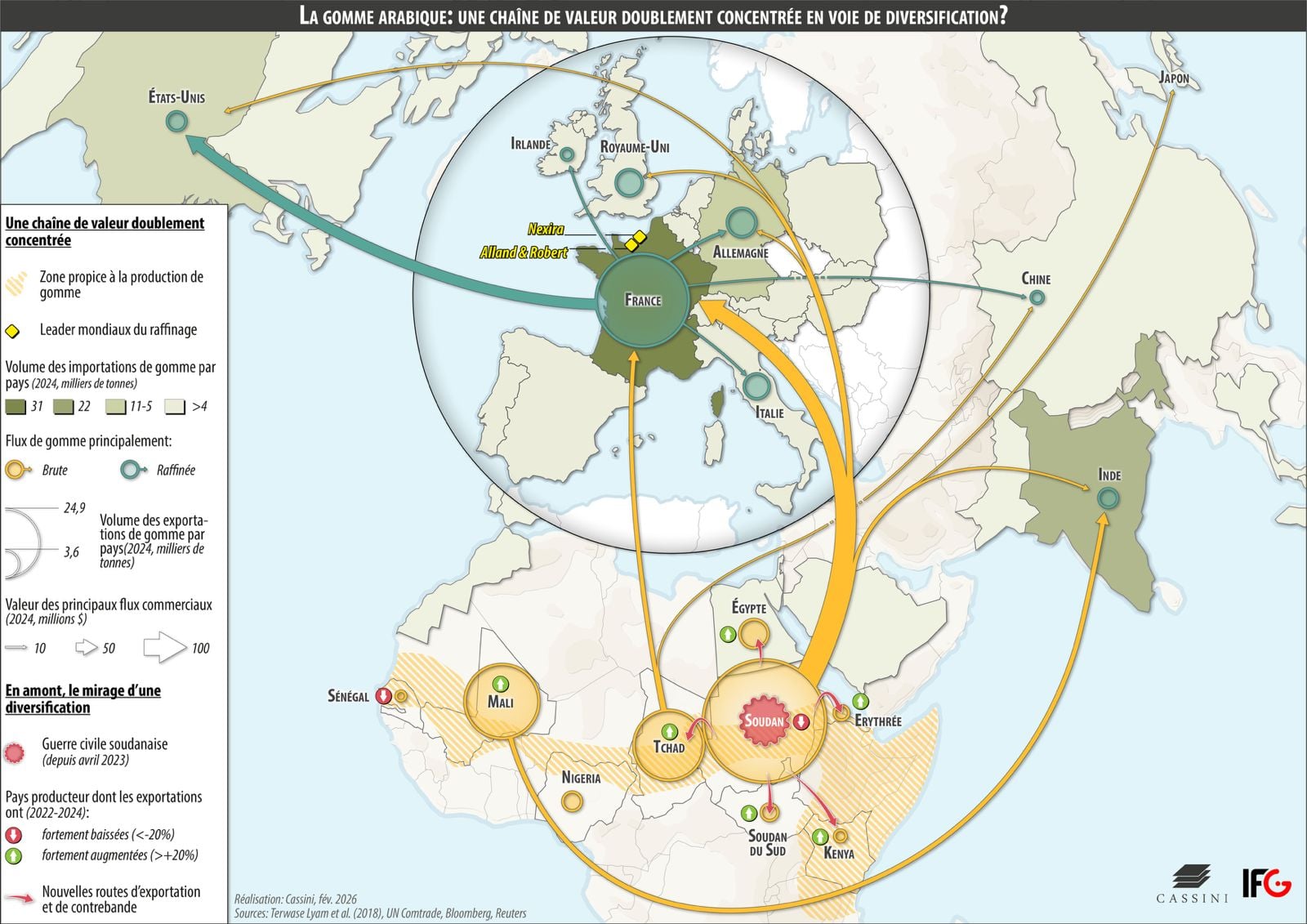
Gum Arabic: A Doubly Concentrated Value Chain on the Path to Diversification?
From the Sahel to Normandy, by way of American markets: how did two French SMEs become the indispensable players in the global gum arabic trade? And how is the Sudanese conflict today destabilising this discreet yet strategic supply chain?
March 2026
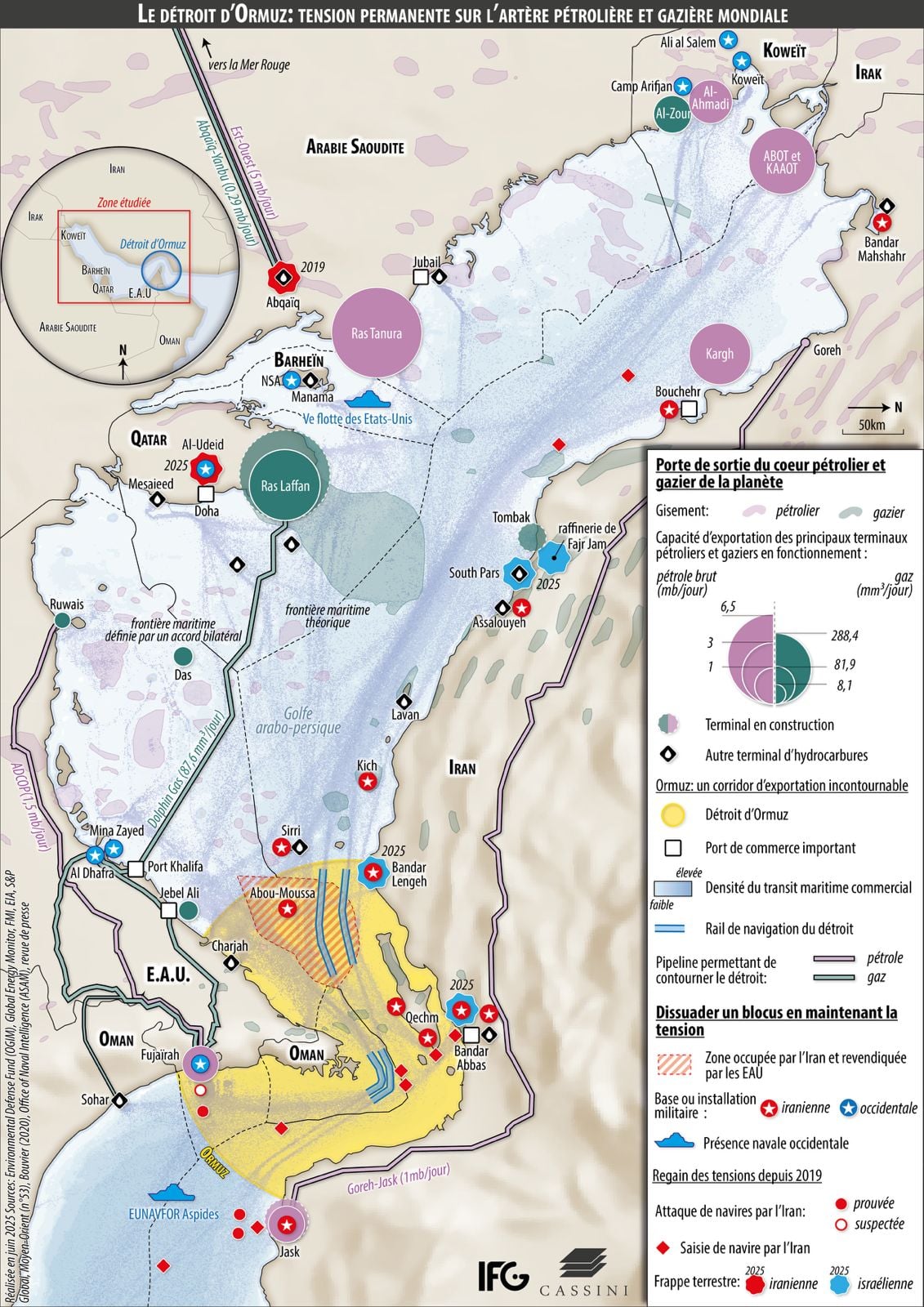
The Strait of Hormuz: Permanent Tension on the World's Oil and Gas Artery
One fifth of all liquefied natural gas and more than a quarter of the world's oil pass through a single passage fifty kilometres wide. As Israel and the United States launch a military campaign against Iran, this strait is becoming more than ever the tipping point of the global energy economy.
January 2026
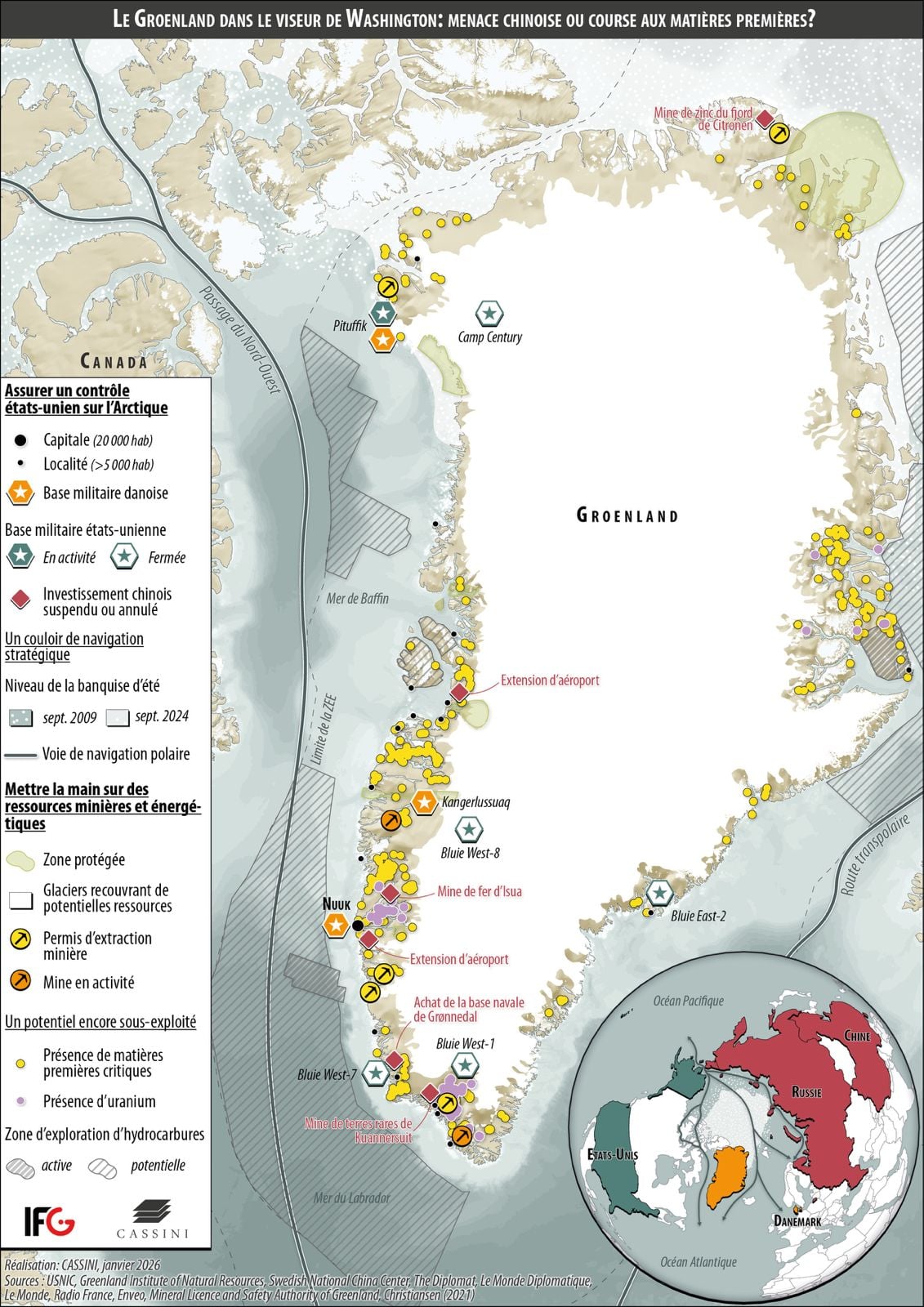
Greenland in Washington's Crosshairs: Chinese Threat or Race for Raw Materials?
Rare earths, Arctic routes, military bases: behind Donald Trump's stated desire to acquire Greenland lie geostrategic and mineral stakes far more complex than mere security rhetoric. A cartographic analysis that nuances the American discourse on the "Chinese threat."