

EDHEC Vox newsletters 2025-2026
You will find here all the EDHEC Vox newsletters published since September 2025. To read them on LinkedIn and/or to subscribe directly : click here.
Please feel free to browse through the other EDHEC Vox articles and interviews, our scientific dissemination platform.

(#19) Managers: what are you waiting for to ‘leave the cave’?
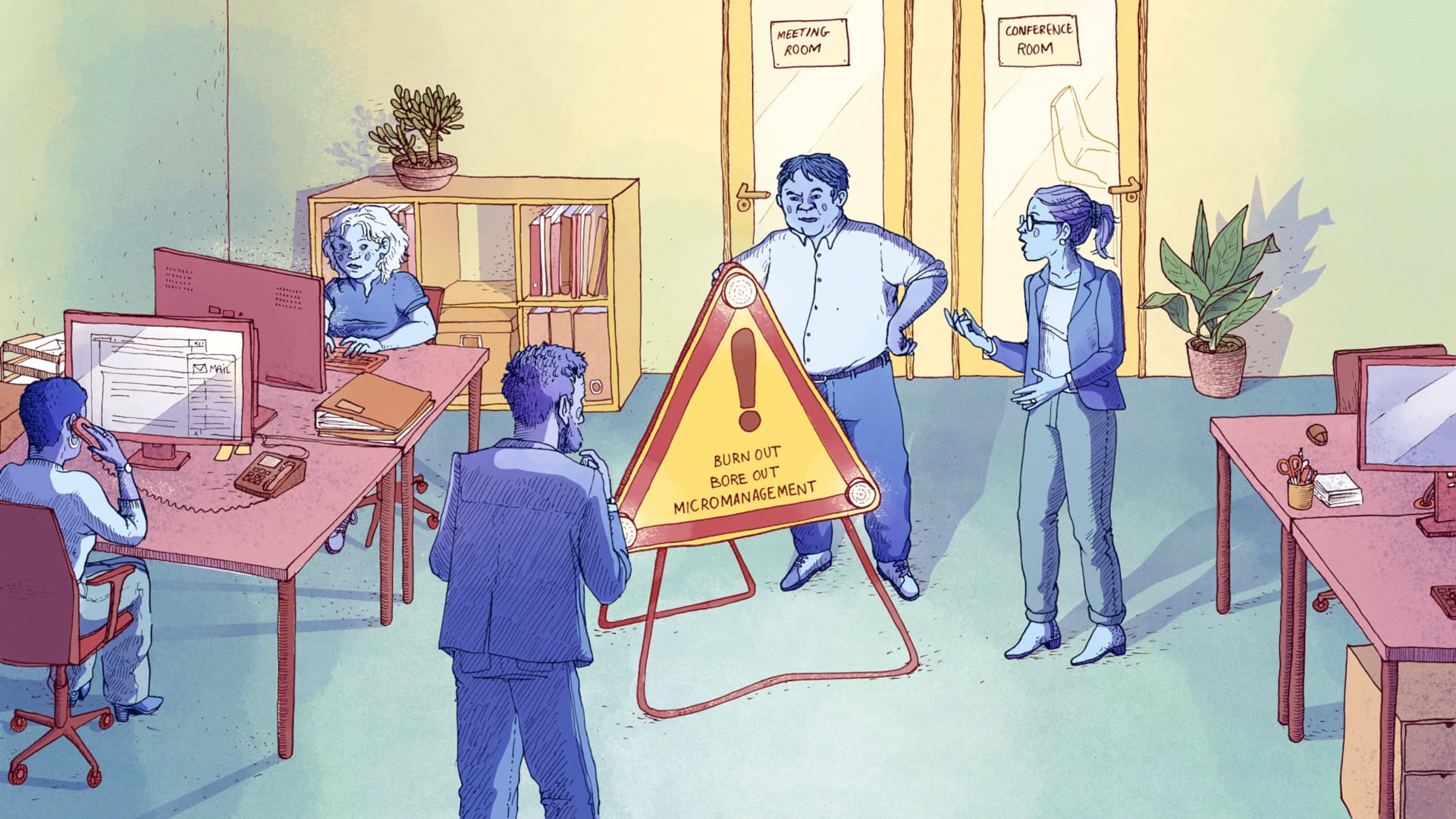
The figure of the manager seems to be perceived alternately, or even simultaneously, by articles, discussions, and at the very heart of organisations, as a solution and/or a problem.
Autonomy, transparency, productivity, trust... and their negative equivalents play the role of ideals or repellents.
But is it reasonable to individualise expectations and tensions to such an extent? Are managers themselves not caught up in demands that are difficult to reconcile? Or, on the contrary, are they not doing enough and should they not seek more information and training, for the benefit of all?
In this new newsletter, our professors present their latest thoughts and suggestions for actions to be taken towards ‘enlightened management’. They are convinced that the status of manager requires the development of strategic, relational, organisational and emotional skills, to name but a few, at any age and in any organisation.
So, are you ready to 'leave the cave’?
- Proactivity at work: managing the cost of going the extra mile - By Mouna El Mansouri, Karoline Strauss, Doris Fay, and Julia Smith
- "As a leader, especially during challenging times, if your words don’t match your behavior, you’re not inspiring anyone" - An interview with Michelle Sisto
- Three key steps to prevent micromanagement - By Julia Milner
- How leaders transform their emotions into assets for making decisions and fully embodying them - By Sylvie Deffayet Davrout
- Addressing professional paradoxes: the importance of emotional intelligence - By Camille Pradies
- (1/2) Mindfulness in the workplace: which techniques for which benefits? - By Peter Daly
- (2/2) Can mindfulness help employees see social inequality more clearly? - By Yanina Rashkova
- A manager who looks out for you, not over you — What young graduates want in a manager - By Geneviève Houriet Segard & Manuelle Malot
- Meet Tristan-Pierre Maury, a committed director and free spirit at the crossroads of knowledge - Tristan-Pierre Maury
(#20) Responsibility, authenticity, circularity... is the luxury sector navigating in the right direction?
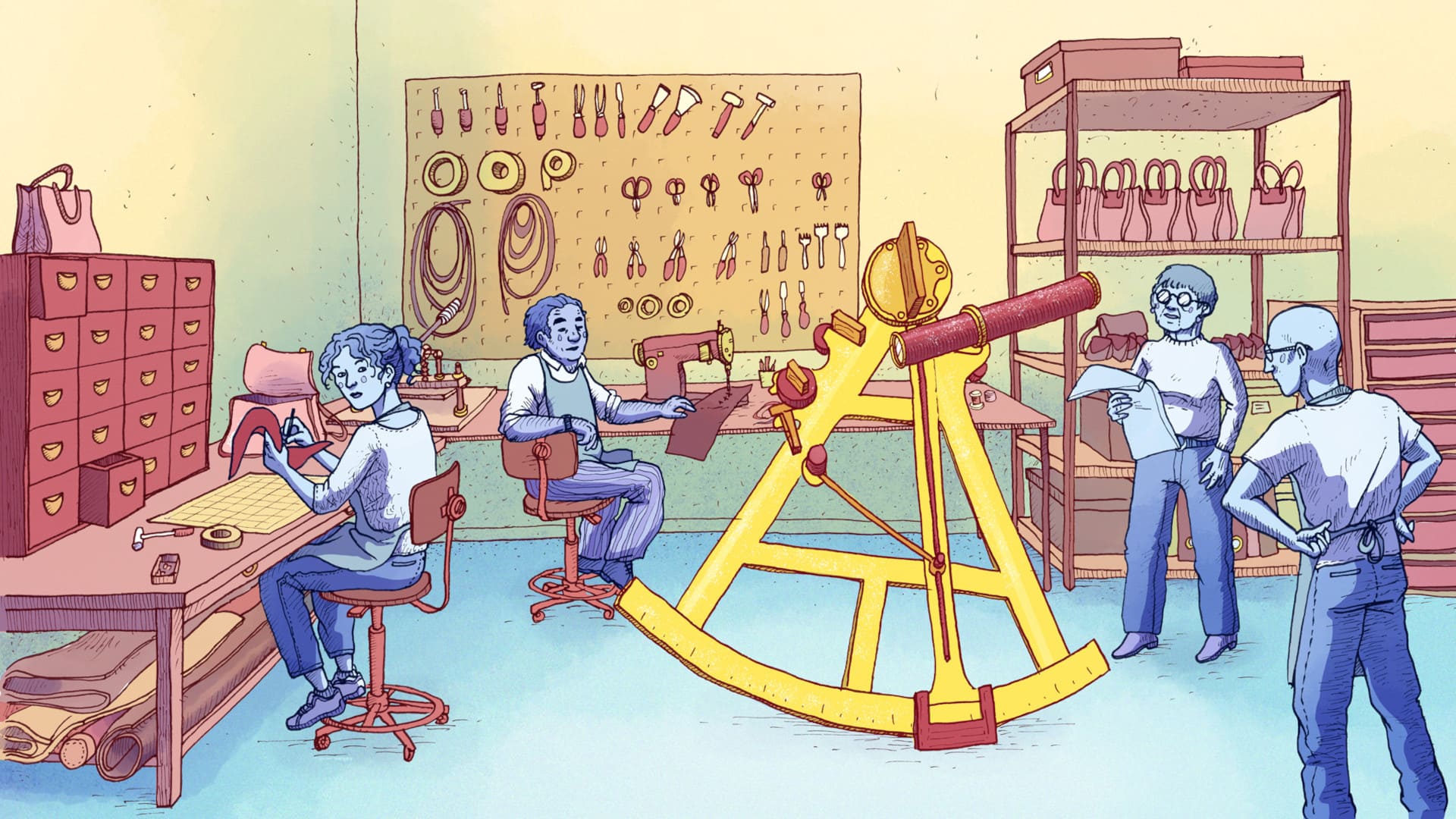
The luxury sector – which encompasses activities as varied as fashion, jewellery, tableware, watchmaking and hotels – is subject to conflicting pressures and expectations.
With an economic weight of €350 billion, or the equivalent of 12% of French GDP, the stakes are far from negligible. From international giants to artisans around the world, the same fundamental questions arise: what is the right balance between tradition and innovation? What role should responsibility in all its forms play, particularly in environmental matters? What should be promoted – unique know-how, second-hand products, innovative sourcing? – and how will consumers react?
In this new issue, our Professors draw on an impressive body of their latest research to revisit key concepts, tackle head-on the main challenges facing the sector and open up new avenues for reflection.
- “In this turbulent period, brands are compelled to reconsider what 'luxury' truly means” - An interview with Marie-Cécile Cervellon
- Understanding why consumers could choose circular luxury - By Arne De Keyser
- Art and organised crime: from awareness to action - By Guergana Guintcheva and Bertrand Monnet
- Who are ethical luxury consumers? - By Joëlle Vanhamme
- Jewellery: can synthetic diamonds and CSR appeal to millennials? - By Sabine Ruaud, Catherine Lejealle and Thierry Delecolle
- "Because it is driven by value rather than volume, the luxury sector can lead the way in circular innovation" - An interview with Thibaut Joltreau
- Luxury consumption in China: a story of dynamic transformation - By Michael Antioco
- Meet Arne De Keyser, a Professor of marketing and a framework-builder for better customer experiences - Arne de Keyser
(#21) Past, present, future: brands facing tough questions
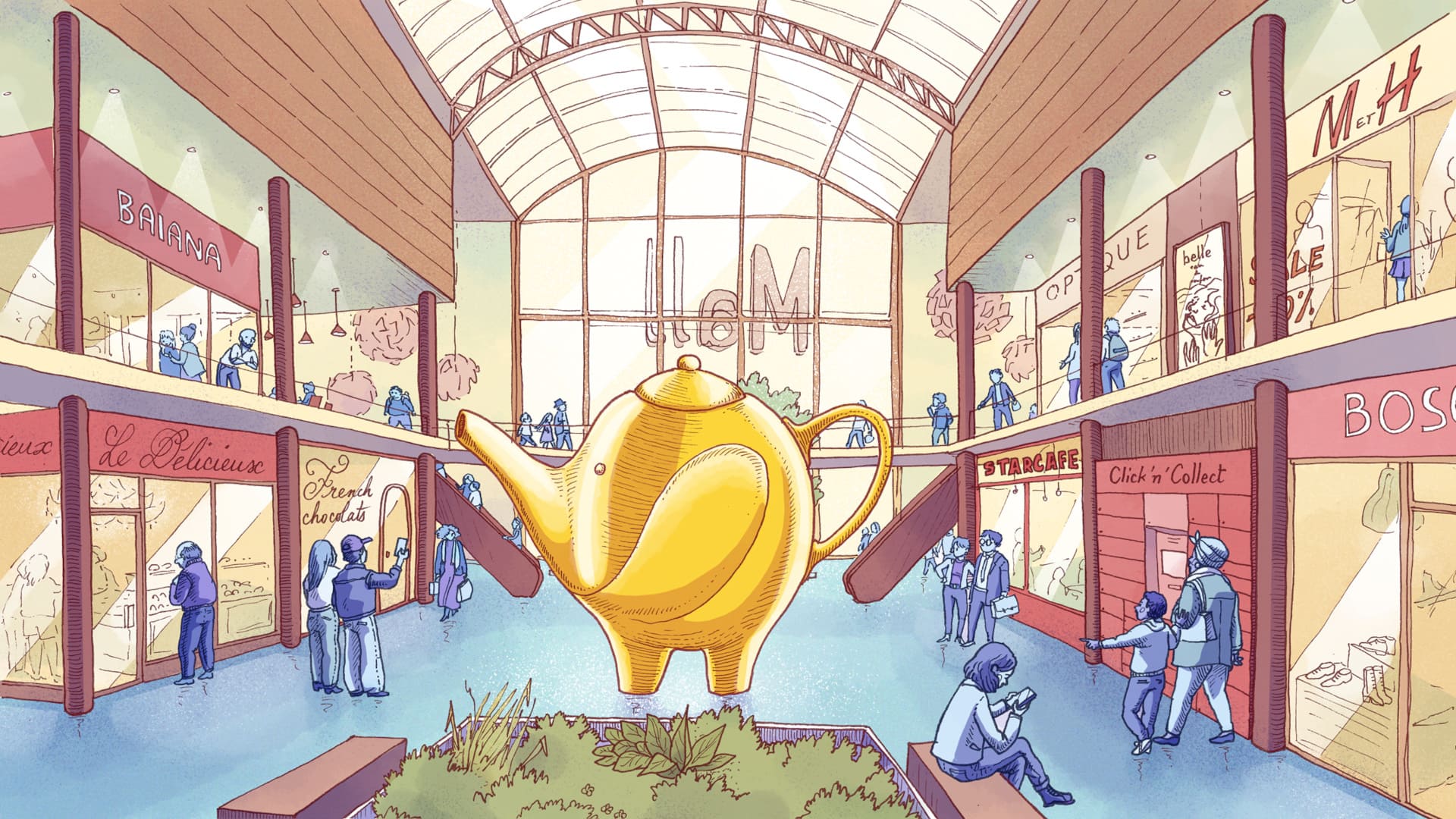
Consumers, new markets, institutional heritage...: across all these dimensions and many others, brands are constantly facing questions and being called into question.
Their relationship with time is essential – Where do we come from? What are today's expectations? Who will we be tomorrow? – and requires significant analysis, choice and adaptation.
In this new issue, our professors present their research and case studies to shed new light on central topics such as the relationship with memory, the ability to evoke emotion, the role of culture and the notion of attachment.
As EDHEC prepares behind the scenes to unveil its brand-new brand platform at the end of November – a key issue in aligning our brand with our strategic ambitions – we hope you enjoy exploring these reflections as much as we did.
- ‘When constructing narratives about and around brands, historians must remain impartial “third parties” and not simply be providers of storytelling’ - An interview with Ludovic Cailluet
- In the avalanche of content, brands must consider consumers' cognitive fatigue - By Alena Kostyk
- 4 questions to P. Daly & S. Ruaud on the internationalisation of the ‘Made in France’ - An interview with Peter Daly and Sabine Ruaud
- Companies & recruitment difficulties: what if your raison d'être replaced your employer brand? - By Geneviève Houriet Segard and Manuelle Malot
- Meet Paolo Antonetti, a Professor putting emotions at the heart of a quest for sustainable marketing - Paolo Antonetti
(#22) Trust: the one thing to stake everything on?

It is a phrase that has been repeated so often that it almost blinds us to its true roots and implications: ‘Trust cannot be decreed.’
For businesses, however, this concept sparks almost philosophical questions: What defines trustworthiness, and what paths lead to its development (or its erosion)? Can trust be cultivated, even through unexpected means? Might a company’s emergency response carry as much weight as the crisis itself? And in the face of today’s crisis of crises - the ecological emergency - could trust be an essential key?
This month, our professors have gathered their knowledge and latest research on this topic. They offer essential insights into macroeconomic instability and the apparent volatility of consumers, helping us to better understand the relationship between trust and ethics, emotions and accounting - among others.
- Trustworthy business in an unstable world - By Wim Vandekerckhove
- Rebuilding trust: the role of accounting in holding society together - By Theresa Harrer
- Restoring and renewing trust: why brands must once again become benchmarks in an uncertain world - By Patrick Longuet
- A decade after Paris: trust misplaced, trust betrayed — and the struggle to reclaim it - By Frédéric Ducoulombier
- How companies can reduce negative emotions in the aftermath of a crisis - By Paolo Antonetti
(#23) Climate: new-generation tools developed by EDHEC
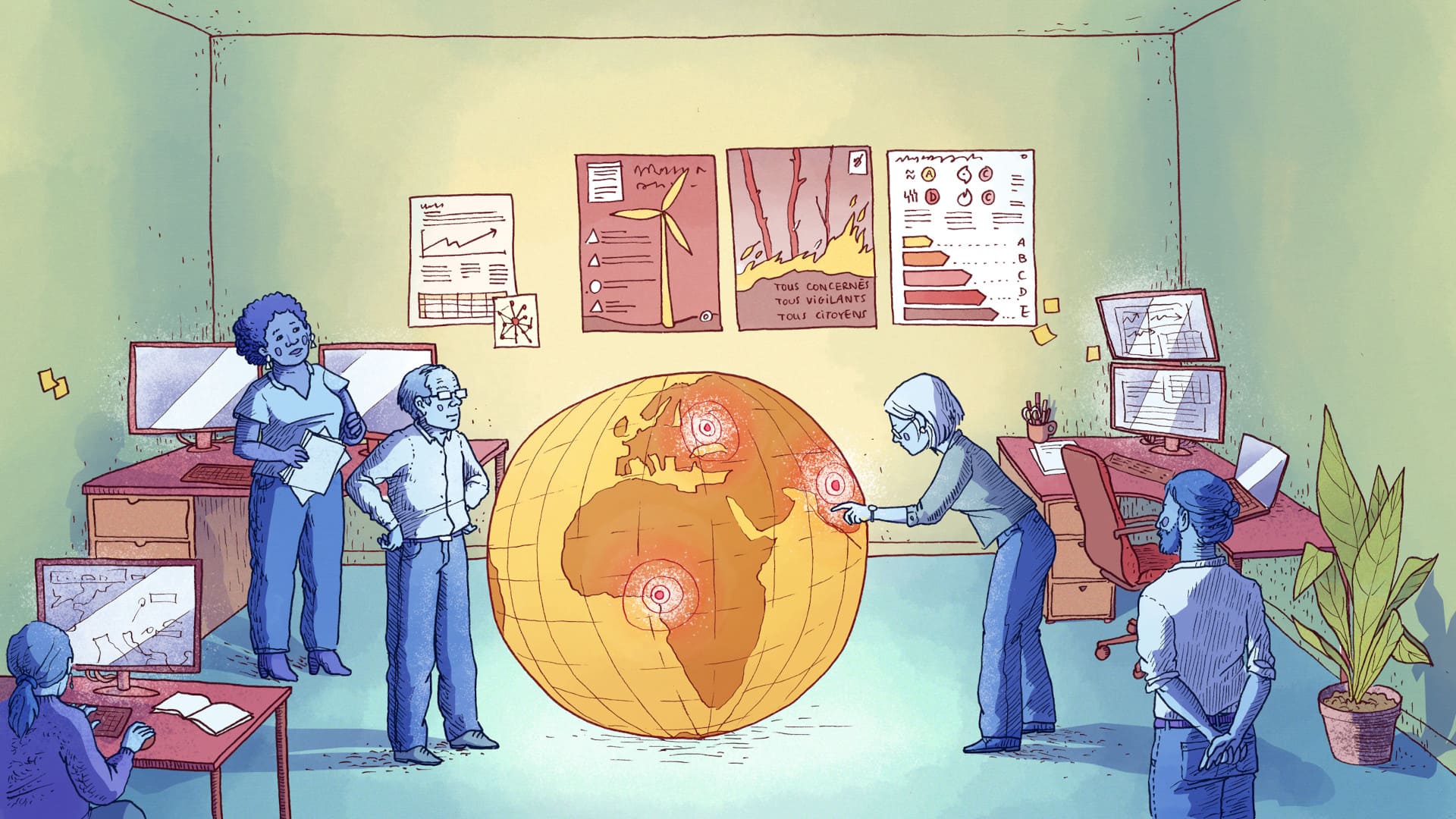
We all feel this strange dissociation: climate change is so global that it seems beyond our control, and yet its effects, sometimes terrible, are already visible in our daily lives, in our immediate region.
Professionals, first as citizens but also as active players in their sectors, are no strangers to this same tension. While public authorities are doing their utmost to tackle the multidimensional nature of this issue, scientists and higher education & research actors in general are also playing their part.
For decades, EDHEC has positioned itself as an institution capable of training and empowering to transform, and of providing research and science-based solutions for public and private decision-makers.
ClimaTech, Clirmap, Excite... This month, we present the latest tools and analyses developed by our researchers to capture the granularity of climate risks and adaptation & transition strategies. In doing so, EDHEC supports decision-making grounded in a simple fact: there is not one climate change, but many climate realities shaping the global economy.
- [#dataviz] ClimaTech: a world-first climate asset lens - By Rob Arnold, Conor Hubert, Nishtha Manocha
- How hot will it get? EDHEC-EXCITE: a new way to explore climate futures - By Lionel Melin and Fangyuan ZHANG
- Europe’s wildfire wake-up call: why climate risk isn’t the same everywhere - By Rémy Estran-Fraioli, Qinyu G., Alice James and Anthony Schrapffer
- "EDHEC-CLIRMAP shows a geography of physical risk and its macroeconomic implications across different warming futures" - With Nicolas Schneider
- Coastal regions and climate change: how better risk assessment can help protect infrastructure and livelihoods - By Anthony Schrapffer
- 3 questions to Nishtha Manocha (EDHEC) on the ClimaTech Project - With Nishtha Manocha
- “After months of preparation, at a crucial time, we are embarking on an intense journey with knowledge and tools that are unique in the sector" - With Rémy Estran-Fraioli
(#24) Who decides? Rethinking the architecture of power
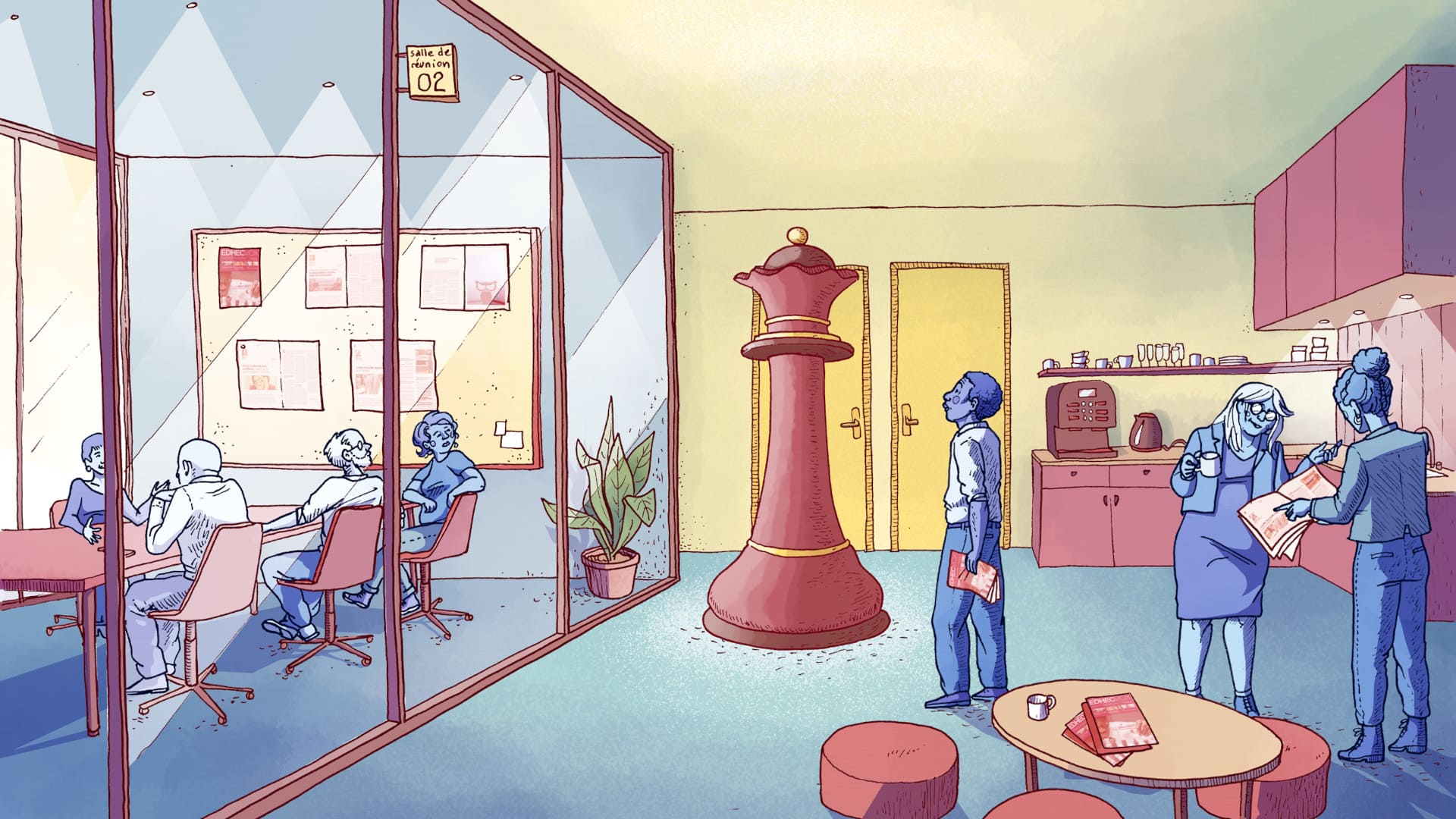
In the latest issue of our biannual magazine, entitled ‘Who Decides? Rethinking the Architecture of Power’ we take the time to develop several perspectives on decision-making.
As Anne Zuccarelli, Associate Dean, Chief Educational Experience and Operations Officer, explains in her editorial, reflecting on decision-making, particularly for our students “[...] is no longer just a question of who decides, but also how, on whose behalf, and with what consequences.”
Available in English and in French, this 17th issue draws on the entire school ecosystem to explore this topic: alumni, professors, programme directors, partners, experts, and more.
We hope that these pages will give you food for thought and encourage you to take action, drawing inspiration from an interview with our Director of Cabinet and Communications, Claire Bergery-Noël: “[our new tagline] ‘Unleash Tomorrow’ is about a shared movement, one that turns toward the future and opens up new possibilities […] It is this link between knowledge and action that defines us.”
- Who decides? - By Anne Zuccarelli
- Business ethics: from façade to infrastructure - By Geert Demuijnck & Wim Vandekerckhove
- Sailing into the storm: how geopolitics crashed the boardroom - By Luc de Rancourt
- “Hackers are always one step ahead”: Corporate defences in an age of evolving threats - By Bertrand Monnet & Philippe Very
- Rebuilding trust in times of crisis - By Paolo Antonetti
- Is Gen Z turning its back on management? - By Manuelle Malot & Geneviève Houriet Segard
- ClimaTech: infrastructure investors’ climate compass - By Camille Angué
(#25) Why is it so difficult to make data speak?

A goldmine for some, a bottomless pit for others. Rich and illuminating material for some, cold and obscuring information for others… Can data be all of these things at once?
Undoubtedly, for as Michelle Sisto, professor and director of the EDHEC AI Centre, points out: “[…] the true ‘gold’ of data lies not in its quantity, but in its potential to help us make sense of the present and anticipate the future”.
As the ultimate hallmarks of a world that is constantly measuring itself, data and its corollaries - the models and algorithms required to process it - lie at the heart of the work of researchers in the social sciences and management. This applies both to their research and teaching, and to their engagement with businesses, public authorities and citizens.
This month, our professors explore how and to what extent it is possible to make data speak. They also highlight the importance of returning to the sources and critically examining processing methodologies.
- Can bankruptcies be predicted algorithmically? - By Philippe du Jardin
- Beyond analytics: telling stories with data - By Michelle Sisto
- [#dataviz] Connected health and AI: what trends in 2026? - By Loick Menvielle
- « On the shoulders of… » Luc Bauwens, by Arnaud Dufays - An interview with Arnaud Dufays about Luc Bauwens
- Estimated, not reported: the hidden weakness in (most) climate finance data - By Abraham Lioui
- “VIP conversation” between M. Rodriguez, CSR Director and P. Taddei Valenza, Associate Professor - An interview with Manuela Rodriguez and Pascale Taddei Valenza
- "The goal of 'surveytainment' is to engage participants so that they voluntarily and attentively participate in the surveys" - With Alena Kostyk
- Meet Lionel Martellini, Director of the EDHEC Quantum Institute, who bridges the gap between physics and finance - Lionel Martellini
(#26) Gender, sustainability, organised crime: what's at stake for culture?

Culture can be seen as holding up a mirror to society. Whilst, in this sense, it undeniably plays a vital role in catalysing thoughts, behaviours and emotions, it is not without its tensions and challenges.
This month, in our latest newsletter, our professors, in turn, hold up a disturbing mirror to the sector: under-representation of women in museums, worrying links to organised crime, blockbuster exhibitions that send carbon emissions soaring, sexism in video games...
But fortunately, this image isn't static. Our researchers suggest numerous solutions and also look at examples – particularly in the fields of performance art, video games and VR – that could help us work better together & make the most of this cultural offering.
- [#dataviz] Are video games sexist? - By Guergana Guintcheva and Hager Jemel-Fornetty
- Marina Abramović, Li Binyuan and Paula Garcia… When artistic performances shed light on how organisations operate - By Yanina Rashkova
- [Case by case #13] Gaining a better understanding of information goods through video games - An interview with Sylvain Colombero
- Why art is a prime target for organised crime - By Guergana Guintcheva and Bertrand Monnet
- Museums and virtual reality: a new era for culture? - By Alena Kostyk, Laurence Dessart, Kirsten Cowan, Michaël Schyns
- Where are the women in museum collections and in positions of responsibility? - By Guergana Guintcheva and Hager Jemel-Fornetty
- Blockbuster exhibitions: how to tackle their mammoth environmental footprint - By Guergana Guintcheva
(#27) Why organisations can no longer afford AI naivety
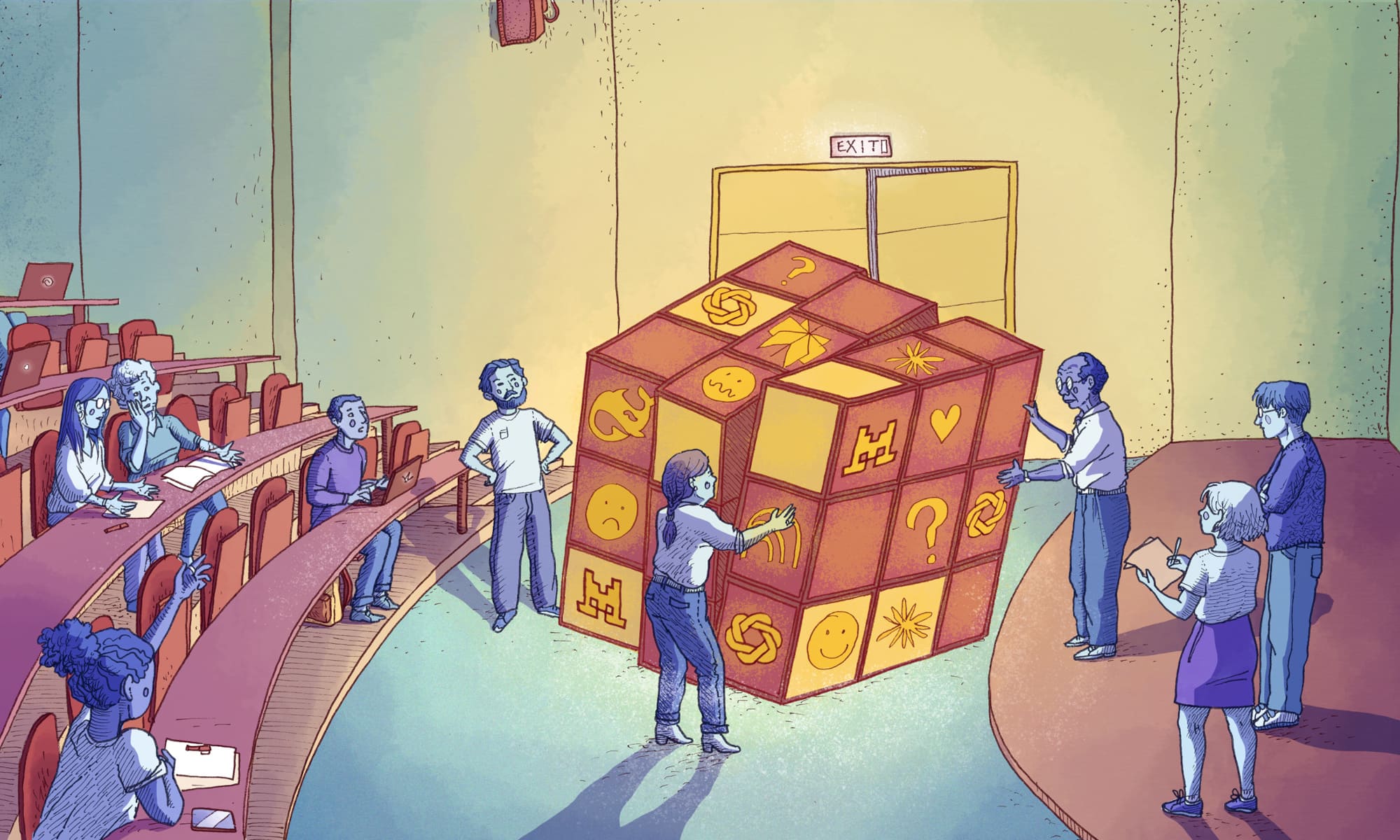
Being caught off guard is rarely pleasant.
Many organisations, institutions, and schools must be telling themselves this right now when it comes to artificial intelligence. Do we have the right approach? What are our staff, students, and researchers doing? What are they no longer doing? Are they unwittingly putting our long-term survival – and their own future – at risk?
Assessing and positioning oneself within the actual scope of the opportunities and the damage is no small task. Yet, if we take a closer look, the puzzle before us is far more complete than it appears.
The era of naivety is over, and all organisations should strive to master AI within their structures. From A to Z.
This is essentially what our professors advocate and elaborate on in articles based on their recent research and initiatives.
- Perspectives on artificial intelligence from Arnaud Billion and Michelle Sisto - A joint interview with Arnaud Billion and Michelle Sisto
- In defense of more and better AI in the production and review of research - By Jana Thiel
- What is the future of organisations in the era of AI? - By Maria Figueroa-Armijos and Maria Ximena Hincapié
- Can AI transform clinical research? - By Loick Menvielle
- AI Generations: What if schools set the rules? - By Benoit Arnaud and Cédric Verbeeck
- "While we need to understand AI and incorporate it into business strategies, usage must be human centric and value-driven" - An interview with Michelle Sisto
- Meet Julia Milner, the Leadership Professor who practices what she teaches - By Julia Milner
(#28) The ethics equation: finding balance between theory and practice
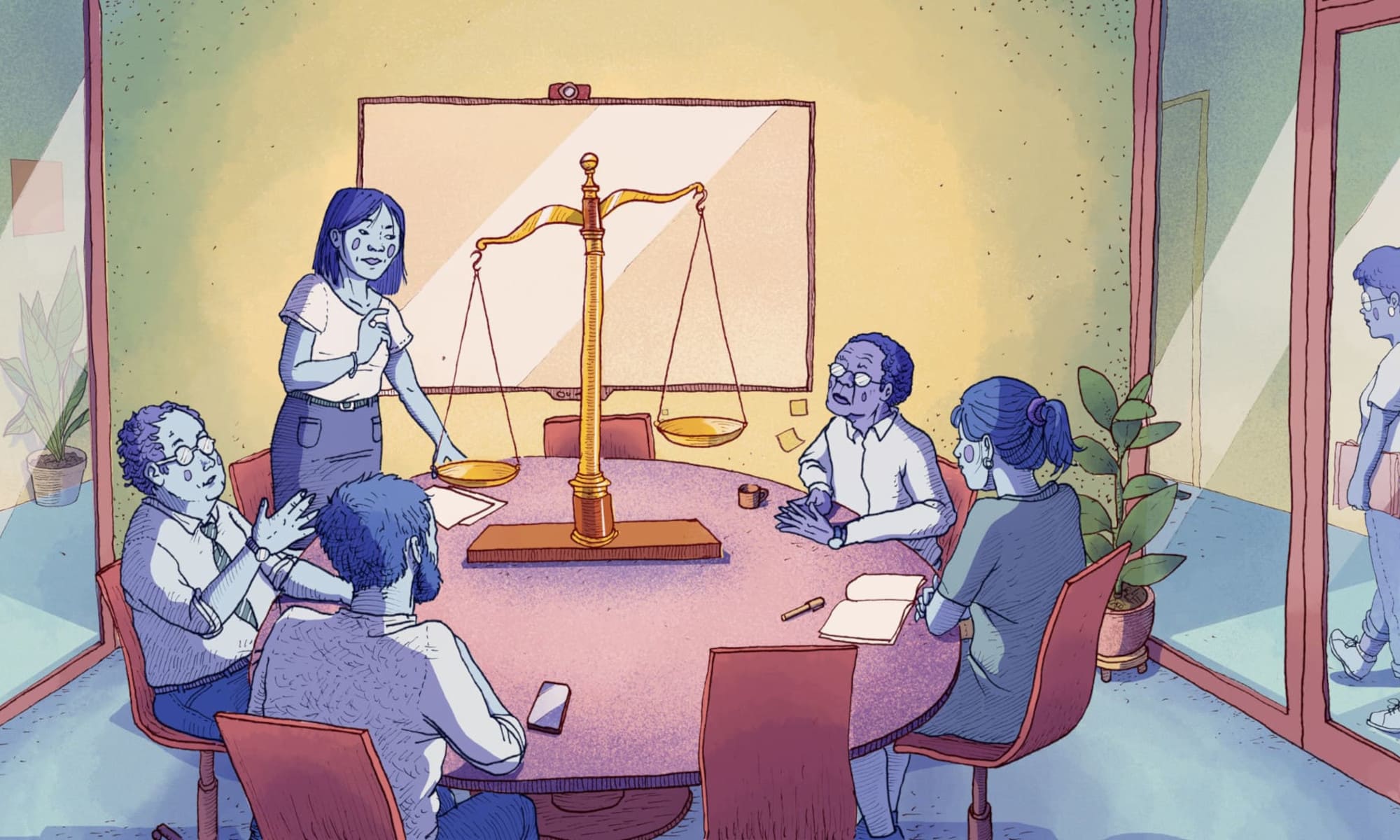
To be ethical or to reflect on being so, to act ethically or to intend to do so, to remain silent or to say too much...
These few tensions - the list of which could have been much longer – and the complexities, or even ambiguities, they suggest, are lurking everywhere, for everyone. Thinking the opposite (“This issue does not (really) concern me”, “the choice is obvious, isn’t it?” etc.) is an early sign of a problem, of a potentially concerning situation, or even of a worrying culture.
This month, our professors and researchers invite us to press the pause button and examine our relationship with ethics. How do we teach this subject? How can we avoid a superficial approach to ethics within organisations? And ultimately, who is responsible for being ethical and acting accordingly?
Find out what they have to say and what they’re proposing in this final Vox newsletter of the academic year.
- 4 questions on the challenges and rewards of teaching ethics at business school - With Bastiaan Van der Linden
- Red flags in the workplace: why whistleblowers are still few and far between - By Wim Vandekerckhove
- 6 questions on EDHEC’s Research Integrity Review Committee - With Michael Antioco
- Who owns a company's past? Arguments for an “ethics of memory” - By Ludovic Cailluet, Hélène Gorge and Fatima Regany
- Taxation: an ideal subject for teaching ethics? - By Peter Daly and Emmanuelle Deglaire
- Clarifying hidden ethics in climate investing - By Vincent Bouchet
- Business ethics: from façade to infrastructure - By Geert Demuijnck and Wim Vandekerckhove
![[#dataviz] Climate change: the new geography of economic losses](/sites/default/files/styles/actu_850_480/public/2026-10/2026-10-header-dataviz-climate-geo-eco.jpg?itok=-dF5t5q_)

