

(Newsletter #28) The ethics equation: finding balance between theory and practice
This month, in the 28th Vox newsletter, our professors and researchers invite us to press the pause button and examine our relationship with ethics. How do we teach this subject? How can we avoid a superficial approach to ethics within organisations? And ultimately, who is responsible for being ethical and acting accordingly?

To be ethical or to reflect on being so, to act ethically or to intend to do so, to remain silent or to say too much...
These few tensions - the list of which could have been much longer – and the complexities, or even ambiguities, they suggest, are lurking everywhere, for everyone. Thinking the opposite (“This issue does not (really) concern me”, “the choice is obvious, isn’t it?” etc.) is an early sign of a problem, of a potentially concerning situation, or even of a worrying culture.
This month, our professors and researchers invite us to press the pause button and examine our relationship with ethics. How do we teach this subject? How can we avoid a superficial approach to ethics within organisations? And ultimately, who is responsible for being ethical and acting accordingly?
Find out what they have to say and what they’re proposing in this final Vox newsletter of the academic year.
Happy reading!
4 questions to Bastiaan van der Linden on the challenges and rewards of teaching ethics at business school
What happens when an ethics class refuses to hand out easy answers? For over a decade, Bastiaan van der Linden has taught business ethics at EDHEC, and he's not interested in getting students to agree. He wants them to know whether they truly disagree, or just misunderstand each other. Because some (most ?) dilemmas have no right answer, and because the openness to pluralism enriches conversation... Read this interview

Red flags in the workplace: why whistleblowers are still few and far between
Out of 200 employees, among the 30 who might notice wrongdoing, only 3 will actually report it. In this article, initially published in The Conversation Europe, Wim Vandekerckhove (EDHEC) traces why the culture of silence is so strong: fear of retaliation, doubt that anything will change, and a wide perception gap between employees and employers about safety. He also presents an open-access tool to help organisations gauge the strength of their speak-up culture and whistleblowing setup... Read this article
6 questions to Michael Antioco on EDHEC’s Research Integrity Review Committee
What changes when researchers know an independent ethics committee is watching from the start, not after the fact? Michael Antioco (EDHEC) explains why the school's Research Integrity Review Committee was launched 2 years ago, how it is run by five professors who are the guardian of its independence. In a nutshell: researchers now think through ethical questions earlier, document protocols more carefully, and increasingly see the committee as a resource... Read this interview

Who owns a company's past? Arguments for an “ethics of memory”
For companies, behind every heritage campaign and sepia-toned museum exhibit lies a quiet negotiation between historians and marketers. Drawing notably on Paul Ricœur's work on memory abuse, Ludovic Cailluet (EDHEC), Hélène Gorge and Fatima Regany (Lille Univ.) conducted new research onto six major French firms. In this article, initially published in The Conversation France, they show how the past gets repressed, manipulated, or forced into service - and what an ethics of organisational memory might look like... Read this article (French version, English version to come in TC Europe)
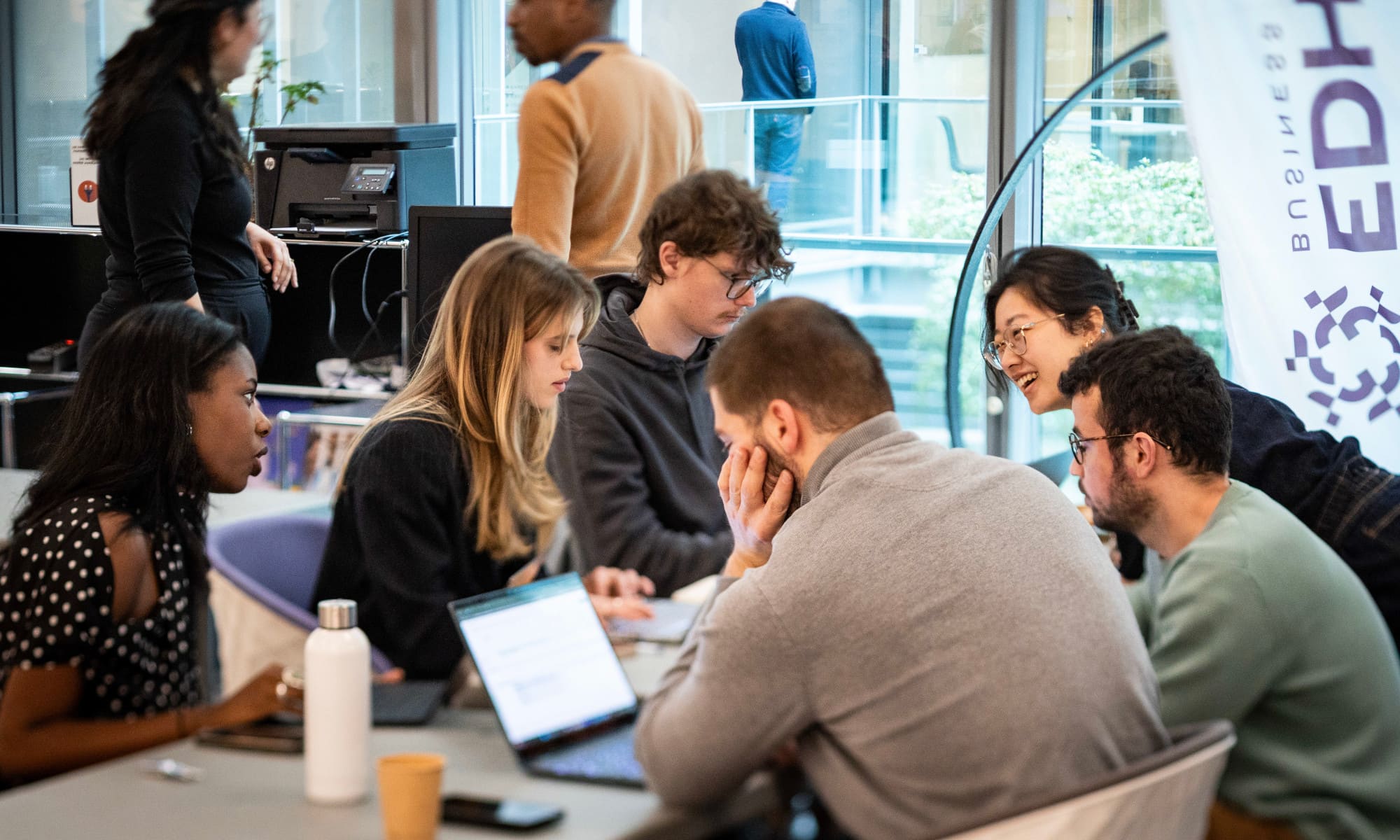
Taxation: an ideal subject for teaching ethics?
Before any theoretical teaching of taxation, Peter Daly and Emmanuelle Deglaire (EDHEC) to give students a broader perspective through an experiential activity. Hundreds of students each year play a five-player game, taking on the roles of public decision-maker and taxpayers across twelve rounds. Not as naive as it seems: students experience first-hand the dilemmas behind tax compliance, before a Socratic classroom discussion ties the game back to real French tax practice... Read this article

Clarifying hidden ethics in climate investing
A study by Vincent Bouchet (Scientific Portfolio, an EDHEC Venture) reveals that climate alignment metrics, often presented as purely scientific, hinge on unspoken ethical choices. He outlines three ethical archetypes - principled, utilitarian, harmonist. He then traces the methodological choices each implies, and tests their impact on a portfolio of the 1,300 largest developed market stocks. The discrepancies in the metrics obtained are truly striking and serve to highlight an issue that has been largely overlooked so far... Read this article

Business ethics: from façade to infrastructure
Pay up, or close down. That was the choice, says a former Lafarge deputy CEO, once accused of financing terrorism in Syria. Geert Demuijnck and Wim Vandekerckhove (EDHEC) encourage us to ask ourselves a simple question: why do companies look away from ethical risk until it's too late? For them, with their many years of research and teaching in business ethics, the path is a winding one: "Building an ethical infrastructure that prevents and gets ahead of ethical crises rather than improvising under pressure requires power and independence"... Read this article
Header, main illustration : Anne Moreau (2026)


