

(Newsletter #25) Why is it so difficult to make data speak?
A goldmine for some, a bottomless pit for others. Rich and illuminating material for some, cold and obscuring information for others… Can data be all of these things at once? This month, our professors explore how and to what extent it is possible to make data speak.

Michelle Sisto, professor and director of the EDHEC AI Centre, points out that: “[…] the true ‘gold’ of data lies not in its quantity, but in its potential to help us make sense of the present and anticipate the future”.
As the ultimate hallmarks of a world that is constantly measuring itself, data and its corollaries - the models and algorithms required to process it - lie at the heart of the work of researchers in the social sciences and management. This applies both to their research and teaching, and to their engagement with businesses, public authorities and citizens.
This month, our professors explore how and to what extent it is possible to make data speak. They also highlight the importance of returning to the sources and critically examining processing methodologies.
Happy reading!

Can bankruptcies be predicted algorithmically?
By Philippe du Jardin (EDHEC)
What if neural networks could be used to predict an organisation’s downfall? In this article, we follow a researcher exploring artificial intelligence models (“neurons”) that combine rigorous science with very real-world applications, particularly in risk prediction. His approach draws on existing knowledge of how firms go bankrupt, identifying recurring patterns in their trajectories and simulating these paths to build more accurate predictive models... Read this article

Beyond analytics: telling stories with data
By Michelle Sisto (EDHEC AI Centre)
Data is seen as raw gold that remains buried without the human art of storytelling to make it actionable. The professor argues here that education must evolve beyond pure technical analysis toward cultivating "translators": professionals who can bridge the gap between complex models and non-technical audiences. Through real-world pedagogical challenges and multicultural teamwork, EDHEC trains students to turn cold numbers into persuasive, ethical narratives that AI cannot replicate... Read this article
![[#dataviz] Santé connectée et IA : quelles tendances pour 2026 ?](/sites/default/files/2026-03/2026-03-header-dataviz-vox-sante-connectee.jpg)
[#dataviz] Connected health and AI: what trends in 2026?
By Loick Menvielle (EDHEC Management in Innovative Health Chair)
For the third year running, Ipsos and EDHEC have analysed how digital health, driven by artificial intelligence, is fundamentally transforming our relationship with healthcare. Indeed, caught between the promise of innovation and major ethical challenges (data protection, privacy, anonymisation, etc.), the expectations and concerns of the French public are changing rapidly... Take a look at this new #dataviz [in French – English version coming soon]
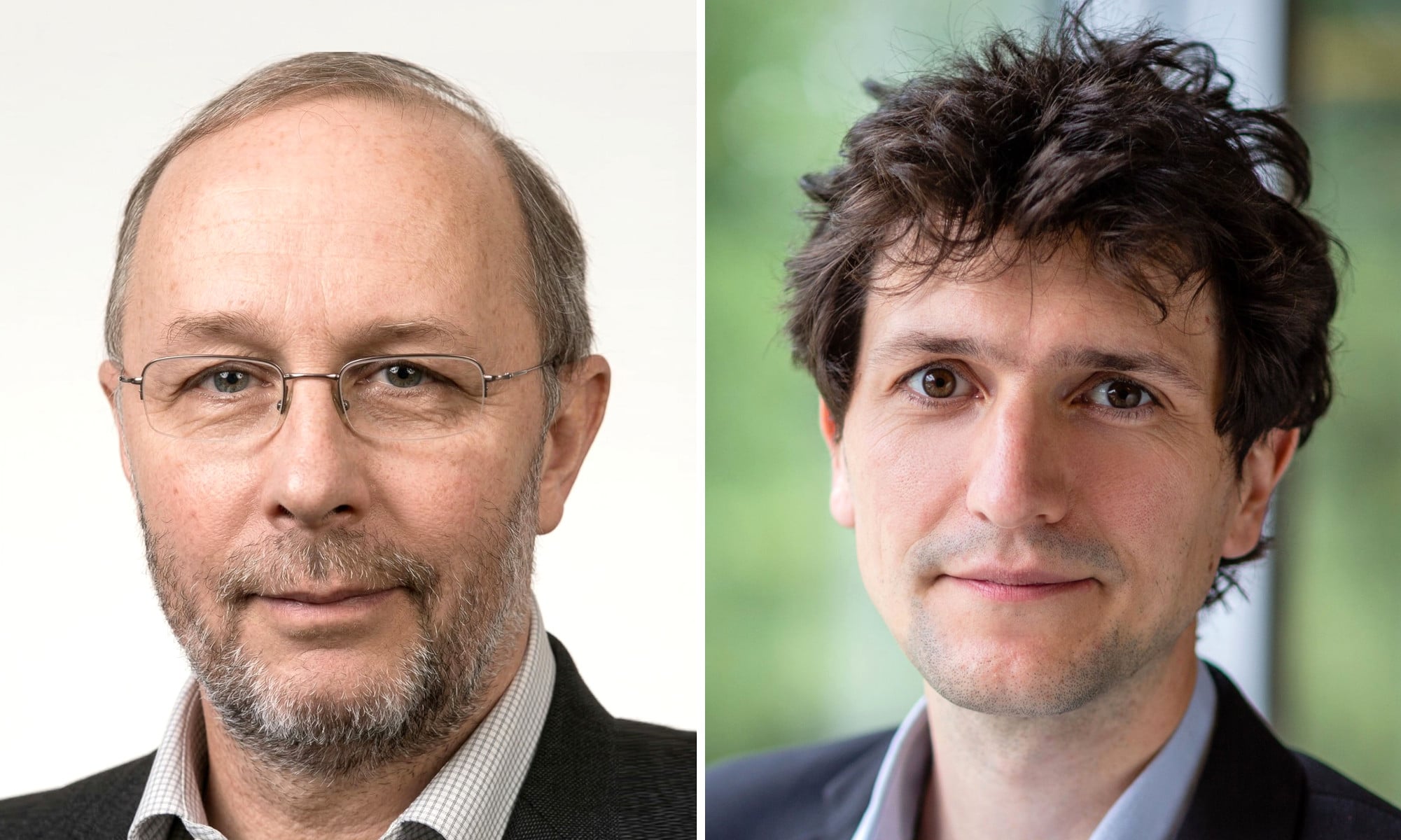
« On the shoulders of… » Luc Bauwens, by Arnaud Dufays
An interview with Arnaud Dufays (EDHEC) about Luc Bauwens (UCLouvain)
How do the first intellectual bonds between a supervisor and their student form? How do they subsequently become co-authors of papers? And, what’s more, of groundbreaking papers? In this interview, the researcher tells us all about this (and more), within the more specific field of statistics, where bayesians and frequentists are locked in an epic battle. We also take a detour to look at teaching and the challenge for students to master the subject without getting lost... Read this interview

Estimated, not reported: the hidden weakness in (most) climate finance data
By Abraham Lioui (EDHEC)
The researcher and his co-authors warn that the $2 trillion climate finance market rests on a "mirage" of data, where opaque model estimates often replace actual company reporting. They see a dangerous paradox: data providers agree on numbers not because they are accurate, but because they use the same flawed, mechanical assumptions. To fix this, machine learning can be used to unmask silent emitters and provide the transparent, rigorous foundation needed for a real green transition... Read this article
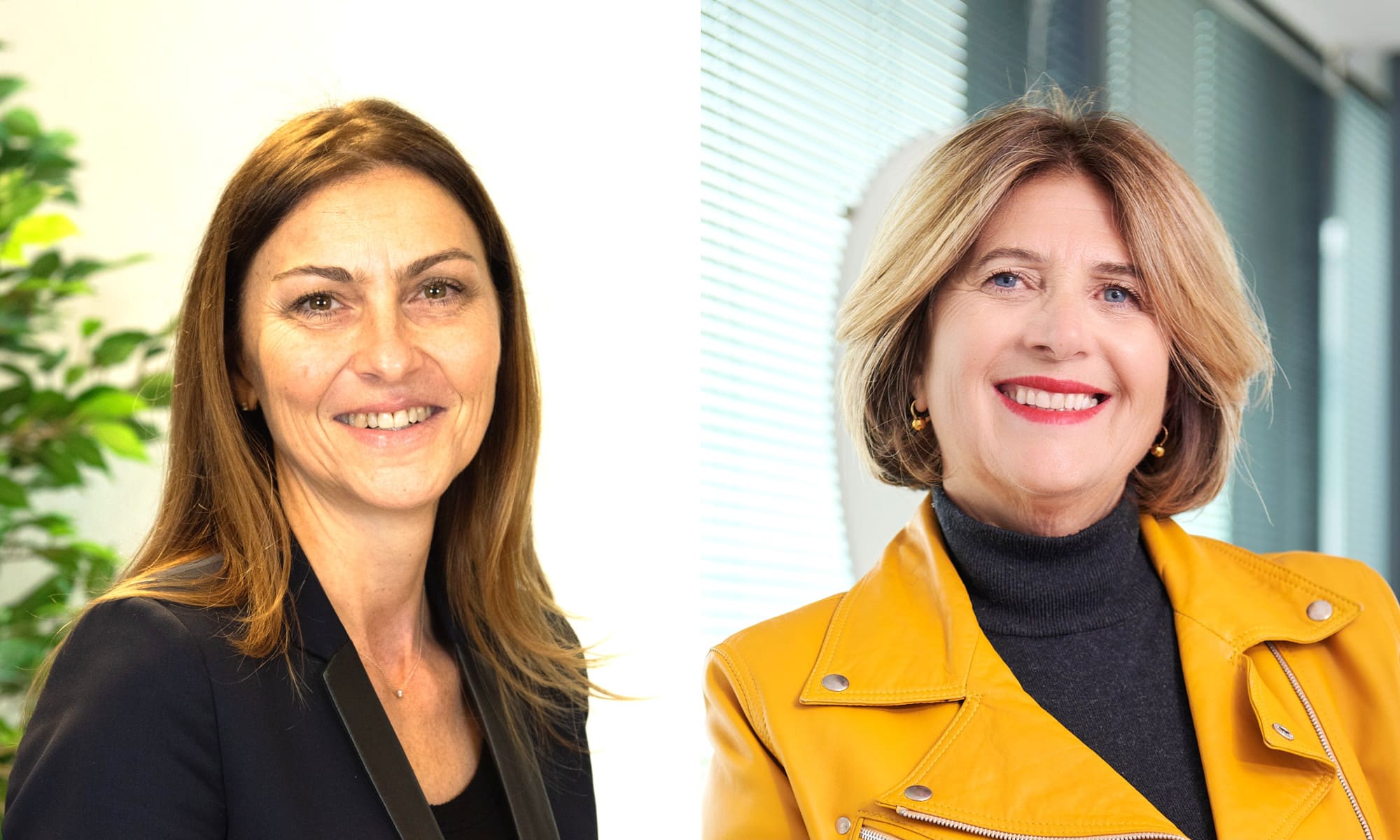
“VIP conversation” between M. Rodriguez, CSR Director and P. Taddei Valenza, Associate Professor
An interview with Manuela Rodriguez (Virbac) and Pascale Taddei Valenza (EDHEC)
The interviewees see the CSRD as a "strategic lens" that elevates sustainability from a technical checklist to a core boardroom priority. They emphasize that while the workload of gathering data is massive, the real value lies in "translating" these complex regulations into a long-term sense of purpose for the company. Their exchange highlights that navigating this shift requires a partnership between academic theory and operational pragmatism to handle the "shockwaves" of evolving standards... Read this interview

"The goal of 'surveytainment' is to engage participants so that they voluntarily and attentively participate in the surveys"
With Alena Kostyk (EDHEC)*
The researcher sees surveytainment as the cure for the "data garbage" caused by widespread survey fatigue. By integrating games and visual breaks, one can shift the focus from rigid data collection to an interactive experience that boosts participant mood and attention. This suggests that while gamification must be used carefully to avoid distraction, it is essential for turning unmotivated "straightlining" into precise, strategic insights... Read this interview
*This article has been initially published by Dr. Kathrin Neumüller. Thank you to her for agreeing to let us republish this interview.
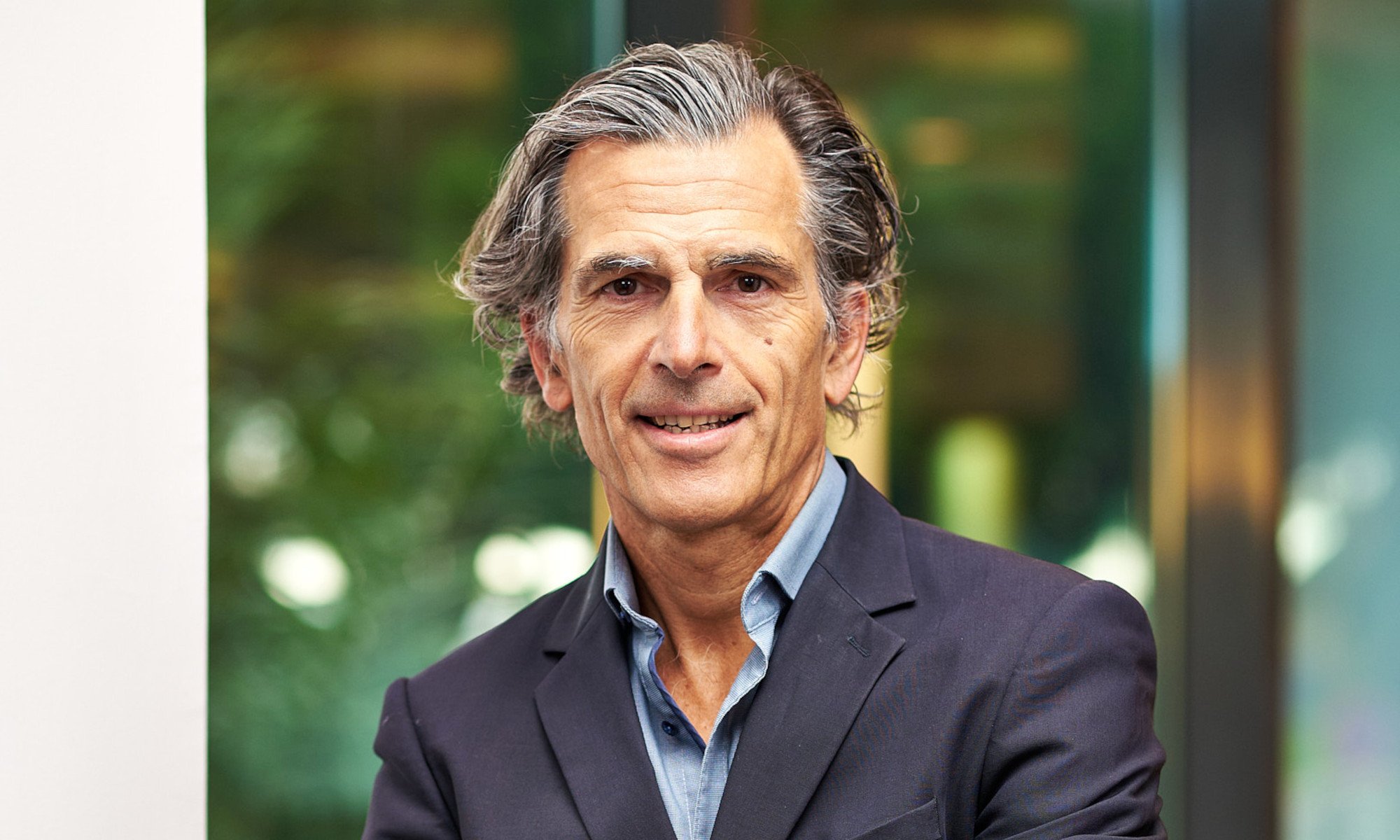
Meet Lionel Martellini, Director of the EDHEC Quantum Institute, who bridges the gap between physics and finance
"Simply listing his qualifications and publications would not be enough to unravel the mystery of who Lionel Martellini really is. A professor of finance, a doctor of astrophysics, and the founder and director of the EDHEC Quantum Institute, he has spent his life pursuing childhood dreams centred on physics whilst also undertaking ambitious projects in finance. Guided by Nietzsche, Einstein and an intellectual legacy passed down from his parents, he is today the embodiment of several worlds that he has made his own with humility and passion..." Read this portrait
Illustration (header) - Anne Moreau, 2026


