

(Newsletter #27) Why organisations can no longer afford AI naivety
When it comes to AI, a lot of organisations are asking themselves: am I taking the right approach? For our professors, the era of naivety is over, and all should strive to master AI within their structures. From A to Z. Read their views in this latest #EDHECVox newsletter.

Being caught off guard is rarely pleasant.
Many organisations, institutions, and schools must be telling themselves this right now when it comes to artificial intelligence. Do we have the right approach? What are our staff, students, and researchers doing? What are they no longer doing? Are they unwittingly putting our long-term survival – and their own future – at risk?
Assessing and positioning oneself within the actual scope of the opportunities and the damage is no small task. Yet, if we take a closer look, the puzzle before us is far more complete than it appears.
The era of naivety is over, and all organisations should strive to master AI within their structures. From A to Z.
This is essentially what our professors advocate and elaborate on in articles based on their recent research and initiatives.
Happy reading!
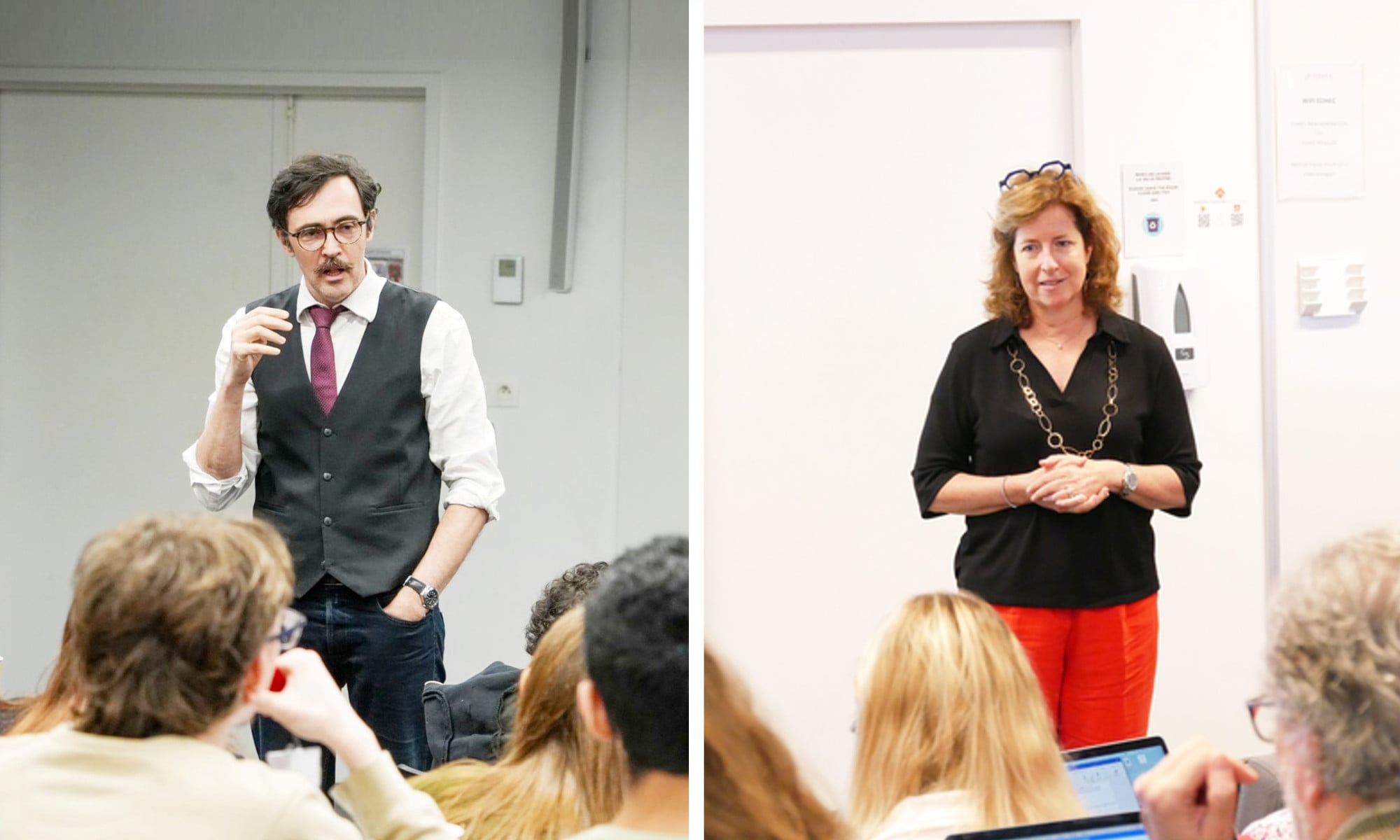
Perspectives on artificial intelligence from Arnaud Billion and Michelle Sisto
A joint interview with Arnaud Billion and Michelle Sisto (EDHEC)
They take two truly complementary approaches to the analysis of artificial intelligence, and more specifically to the new chapter unfolding in the relationship between individuals & organisations and this new technology. Both researchers interviewed call for its ethical regulation, for the need to lift the veil of ignorance (it is neither a simple tool nor a magical gift), and for the essential understanding of its effects on learning processes and mental health. Among other insightful and illuminating analyses... Read this interview

In defense of more and better AI in the production and review of research
By Jana Thiel (EDHEC)
Editors of a prominent scientific journal recently analysed thousands of articles and review reports, uncovering troubling trends linked to generative AI: surging submission numbers, deteriorating writing quality, and a drift toward producing more rather than better research. While the professor here broadly agrees with these findings and supports the core conclusions, she brings additional perspectives. She advocates that AI can be used in thoughtful, transparent ways that might actually address longstanding inequities in academic publishing and speed up the production of truly original research... Read this article

What is the future of organisations in the era of AI?
By Maria Figueroa-Armijos (EDHEC) and Maria Ximena Hincapié (Universidad de los Andes - Colombia)
To make sense of the new complexities posed by AI, we need a different approach: genuine cross-sectoral dialogue, solutions adapted to different scales, and the will to tackle challenges as systemically as they deserve. Beyond this overview, the authors map out the next steps and the pitfalls to avoid. Because as AI reshapes industries and displaces jobs, reskilling our workforce is no longer optional. But who bears the responsibility, and how do we ensure this transformation doesn't deepen global inequalities?... Read this article

Can AI transform clinical research?
By Loick Menvielle (EDHEC)
AI is transforming medicine, but not as fast as the headlines suggest. Barely 10% of practitioners say they're comfortable with it, patients remain sceptical, and the regulatory framework is lagging behind. Yet the potential is real: from diagnostic imaging to predicting cancer relapse, from smarter patient selection in clinical trials to truly personalised care. The researcher takes here a very close interest in these issues, wondering how trust, transparency and ethical safeguards can serve as a guide to make AI a genuine ally in clinical research, rather than just a promise... Read this article

AI Generations: What if schools set the rules?
By Benoit Arnaud and Cédric Verbeeck (EDHEC)
A large majority of students now use AI daily for data search, writing and analysis. But knowing how to use this technology is very different from knowing when to doubt it. The authors explain here why and how EDHEC is training a new generation of managers & leaders: people who understand AI and know how to harness it, people who challenge the AI tech and experts, and see through the blind spots within their organisations. Thanks to a structured curriculum, serious games & hackathon, a dedicated AI centre (among other initiatives) the school is trying to write the rules, at the right pace, whilst making improvements along the way... Read this article

"While we need to understand AI and incorporate it into business strategies, usage must be human centric and value-driven"
An interview with Michelle Sisto (EDHEC)
Setting up a centre dedicated to artificial intelligence – yes. But what approach, what ideas, and what teaching methods should actually drive it, and be driven by it? The interviewee looks back on her career, the early days of the centre she is directing, and explains the educational philosophy she champions, in collaboration with the school’s faculty, management and programmes: “AI will continue to improve and accelerate, so curiosity, adaptability and resilience will remain key leadership qualities.” And EDHEC is working tirelessly to respond to this with dedication and ingenuity... Read this interview

Meet Julia Milner, the Leadership Professor who practices what she teaches
"She teaches leadership the way she lives it: as an iterative journey, not a set of pre-digested answers. It’s a lifelong process she fell in love with many moons ago, a skill set she has been refining class after class, whether she led them or sat in the student chair herself. You won’t find many teachers who also dare to test their own ideas in the wild, but Julia Milner always comes back from these experiments with a renewed eagerness to share her positivity and to embolden others to do the same..." - Read this portrait
Header, main illustration : Anne Moreau (2026)


